


Fiberglass insulation is lightweight, effective, and used in everything from residential attics to commercial buildings.
It is also very good at creating airborne fibers and dust when it is cut, torn, handled, removed, or installed.
Anyone who has spent an afternoon working in an attic knows the feeling. Fiberglass particles can end up on your clothing, your skin, in your eyes, and in the air around you.
That raises an obvious question: what respirator should you wear when working with fiberglass insulation?
For many common fiberglass-insulation applications, a properly fitted N95 particulate respirator can be a practical starting point. 3M specifically markets several N95 models for fiberglass insulating, sanding, sawing, and other dusty work.
But N95 is not the only option.
N100 and P100 respirators provide higher particulate filtration efficiency, valved models can improve comfort in hot attics and construction environments, and reusable respirators may make more sense for professionals working with insulation every day.
This guide explains the differences and helps you narrow the choices.
If you're new to respirator ratings, start with our Complete Guide to 3M Disposable Respirators and our comparison of N95 vs. P95 vs. P100 respirators.
Why Wear a Respirator Around Fiberglass?
 Fiberglass insulation is made from extremely fine glass fibers bound together into batts, rolls, loose-fill material, or other forms.
When insulation is moved or disturbed, some fibers and dust can become airborne.
Common activities that can release particles include:
- Cutting fiberglass batts
- Tearing or pulling insulation apart
- Installing insulation overhead
- Removing old insulation
- Working in attics and crawl spaces
- Handling loose-fill fiberglass
- Demolition and remodeling
- Sweeping or cleaning after installation
Fiberglass can irritate the eyes, skin, nose, and throat, and airborne particulate exposure is one reason respiratory protection is commonly considered during installation and removal.
A respirator should be only one part of the overall protection strategy.
Ventilation, careful handling, housekeeping, protective clothing, gloves, and eye protection can all help reduce exposure.
Is an N95 Respirator Good for Fiberglass Insulation?
For many common fiberglass-insulation tasks involving non-oil airborne particles, an N95 can be an appropriate option when properly selected and fitted.
N95 means the respirator is not resistant to oil and provides at least 95 percent filtration efficiency against the applicable NIOSH test aerosol.
3M specifically identifies fiberglass insulating as one of the potential applications for the 3M 8210 N95.
3M also sells dedicated consumer and professional respirators marketed specifically for sanding and fiberglass work.
An N95 may therefore be a logical choice for tasks such as:
- Installing fiberglass batts
- Cutting insulation
- Handling fiberglass rolls
- Light insulation removal
- General cleanup involving fiberglass dust
But the correct respirator always depends on the complete exposure.
Old insulation, contaminated attic spaces, mold, asbestos-containing materials, chemical sprays, animal waste, construction dust, or other hazards may require a different approach.
N95 vs. N100 vs. P100 for Fiberglass
Fiberglass particles do not automatically require a P100 respirator.
The different ratings primarily tell you about filtration efficiency and resistance to oil.
| Rating | Minimum Filtration Efficiency | Oil Resistance | Fiberglass Consideration |
|---|---|---|---|
| N95 | 95% | No | Common starting point for certain non-oil fiberglass particulate exposures |
| N100 | 99.97% | No | Higher-efficiency particulate option where oil aerosols are absent |
| P100 | 99.97% | Strongly resistant to oil | Higher filtration plus oil resistance where the application requires it |
An N100 or P100 may be considered when the exposure assessment calls for higher filtration efficiency or when the worker prefers the features of a higher-end respirator.
P100 adds oil resistance, which is useful in environments containing oil aerosols but is not inherently necessary simply because fiberglass is present.
Should You Use a Valved Respirator for Fiberglass?
 If you've ever installed insulation in an attic during summer, you already know why this question matters.
Fiberglass installation can be physically demanding, and attics, wall cavities, mechanical spaces, and construction sites can become extremely hot.
An exhalation valve helps warm, moist exhaled air leave the respirator.
It does not increase the N95 filtration rating.
For example, both the 3M 8210 and 3M 8210V are N95 respirators. The primary difference is that the 8210V incorporates an exhalation valve for added comfort in hot or physically demanding environments.
Similarly, 3M offers an 8511-series respirator specifically marketed for sanding and fiberglass applications with a valve.
If you're trying to determine whether a valve makes sense for your work, read our Valved vs. Non-Valved N95 Respirator Guide.
3M Respirators for Fiberglass: Quick Comparison
| 3M Model | Rating | Valve | Style | Why Consider It? |
|---|---|---|---|---|
| 3M 8200H10-DC | N95 | No | Cup | Specifically packaged for sanding and fiberglass projects |
| 3M 8210 | N95 | No | Cup | 3M specifically lists fiberglass insulating among its applications |
| 3M 8210V | N95 | Yes | Cup | Valved alternative for hot and demanding work |
| 3M 8511H-Series | N95 | Yes | Cup | Marketed specifically for sanding and fiberglass with valved comfort |
| 3M Aura 9210+ | N95 | No | Three-panel flat fold | Premium flat-fold option for dusty particulate work |
| 3M VFlex 9105 | N95 | No | Pleated flat fold | Roomy interior and flexible pleated design |
| 3M 8233 | N100 | Yes | Cup with faceseal | 99.97% filtration for certain non-oil particulate applications |
| 3M 8293 | P100 | Yes | Cup with faceseal | Higher-efficiency filtration with oil resistance |
These are general examples, not universal respirator recommendations. Always select respiratory protection for the complete workplace exposure, required protection factor, and individual wearer.
3M 8200 Sanding and Fiberglass Respirator
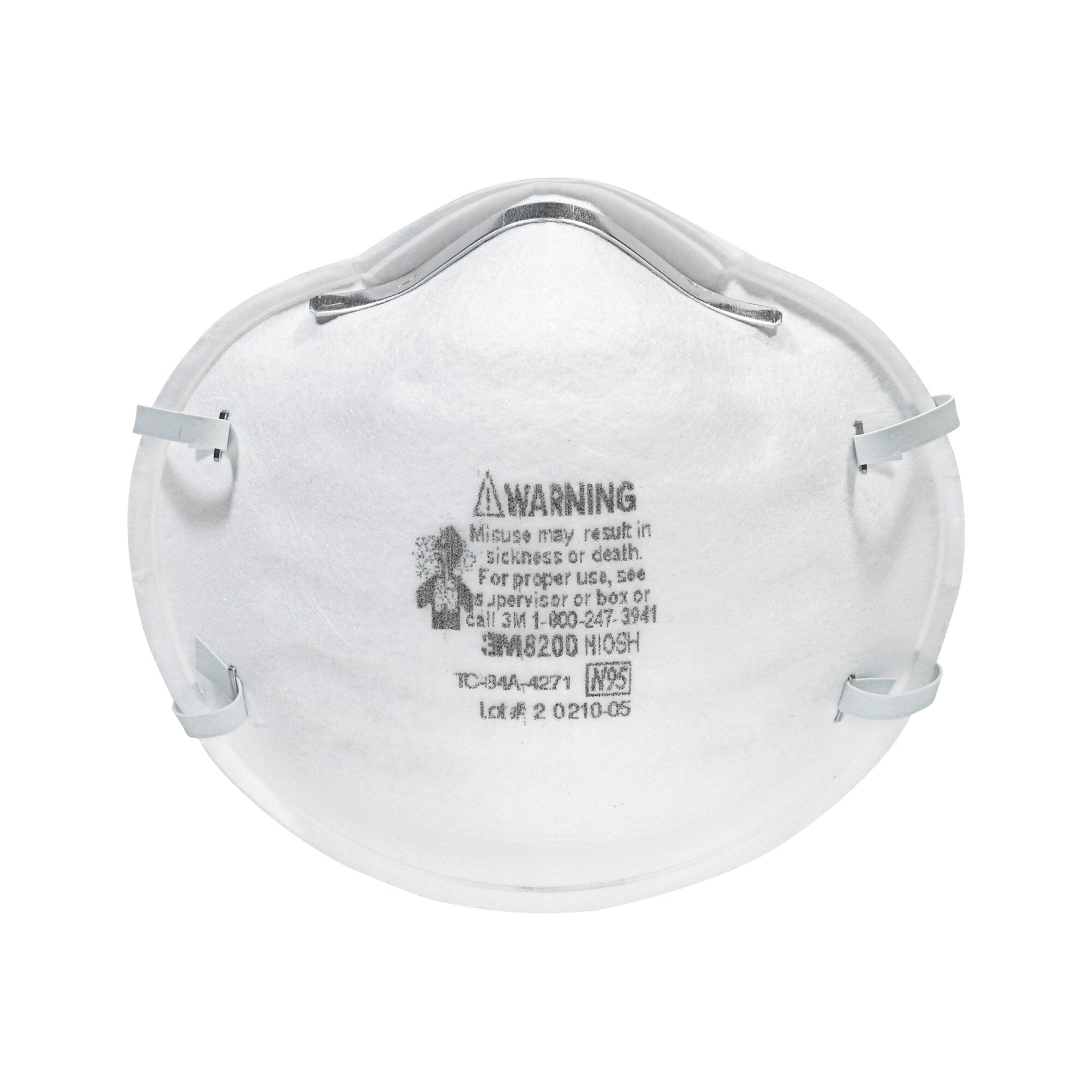
If your primary job is installing or handling fiberglass insulation, this is one of the most directly targeted products in the 3M lineup.
The 8200H-series is marketed specifically for sanding and fiberglass projects.
Features include:
- NIOSH-approved N95 filtration
- Advanced filter media
- Cushioning nose foam
- Adjustable noseclip
- Stretchable headbands
- Lightweight disposable construction
3M recommends this family for activities including sanding, sawing, grinding, drywall sanding, woodworking, and working with fiberglass insulation particles.
For homeowners insulating a room or contractors looking for a straightforward non-valved N95 for fiberglass work, the 8200 line is a logical place to start.
3M 8210 N95: The Classic Professional Option
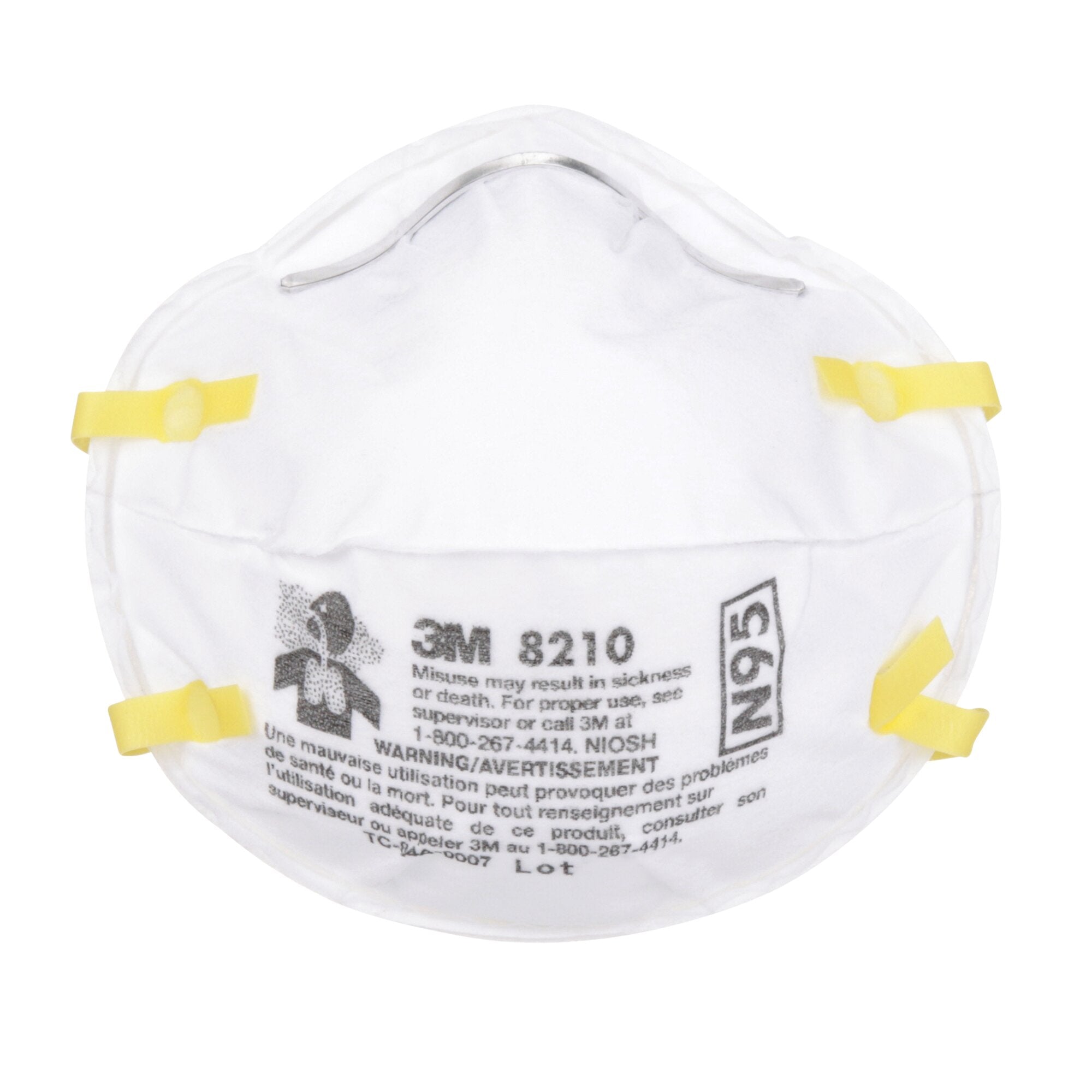
The 3M 8210 is one of the most familiar N95 respirators in construction and industrial work.
Unlike a product labeled specifically for fiberglass, the 8210 is designed as a broader general-purpose particulate respirator.
3M still explicitly lists fiberglass insulating as one of its potential uses.
Features include:
- N95 particulate filtration
- Advanced electrostatic filter media
- Cushioning nose foam
- Adjustable noseclip
- Stretchable headbands
- Lightweight molded design
This makes the 8210 especially attractive to contractors who need one respirator for several common dusty tasks rather than buying a different model for fiberglass, drywall, sanding, and woodworking.
3M 8210 or 8200 for Fiberglass?
Both are N95 particulate respirators and both can be appropriate for certain fiberglass-related work.
The 8200H-series is packaged and marketed specifically toward sanding and fiberglass applications.
The 8210 is a broader industrial N95 with a long history in construction, manufacturing, sanding, woodworking, and general particulate work.
The best choice is ultimately the model that is appropriate for the exposure and fits the wearer correctly.
3M 8511-Series: Fiberglass Protection With a Valve
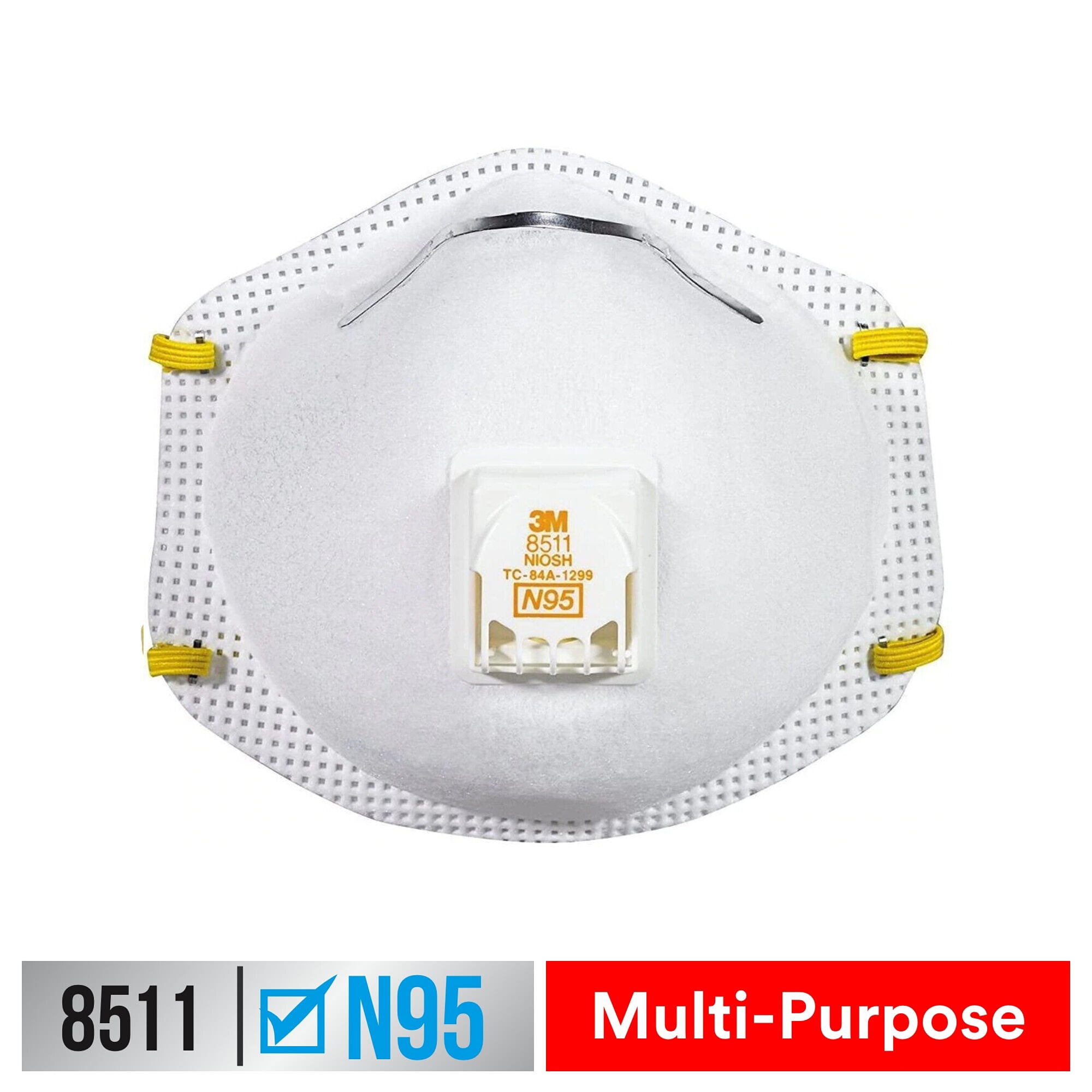
If heat is the biggest complaint about wearing a respirator during insulation work, the 8511 family is worth considering.
EIO carries the 3M Sanding and Fiberglass Valved Respirator 8511H-series, which combines N95 filtration with an exhalation valve.
The valve helps warm, moist exhaled air leave the respirator more easily.
That can be particularly useful when working in:
- Hot attics
- Unconditioned buildings
- Crawl spaces
- Outdoor construction sites
- Mechanical spaces
- Long insulation-installation shifts
The valve does not make the respirator filter more particles than another N95 simply because it has a valve.
Its primary advantage is comfort.
What About 3M Aura and VFlex Respirators?
 You do not need a respirator with the words “fiberglass insulation” printed on the package for it to potentially be appropriate for fiberglass particles.
Other N95 designs can provide useful alternatives where an N95 is appropriate.
3M Aura 9210+ N95
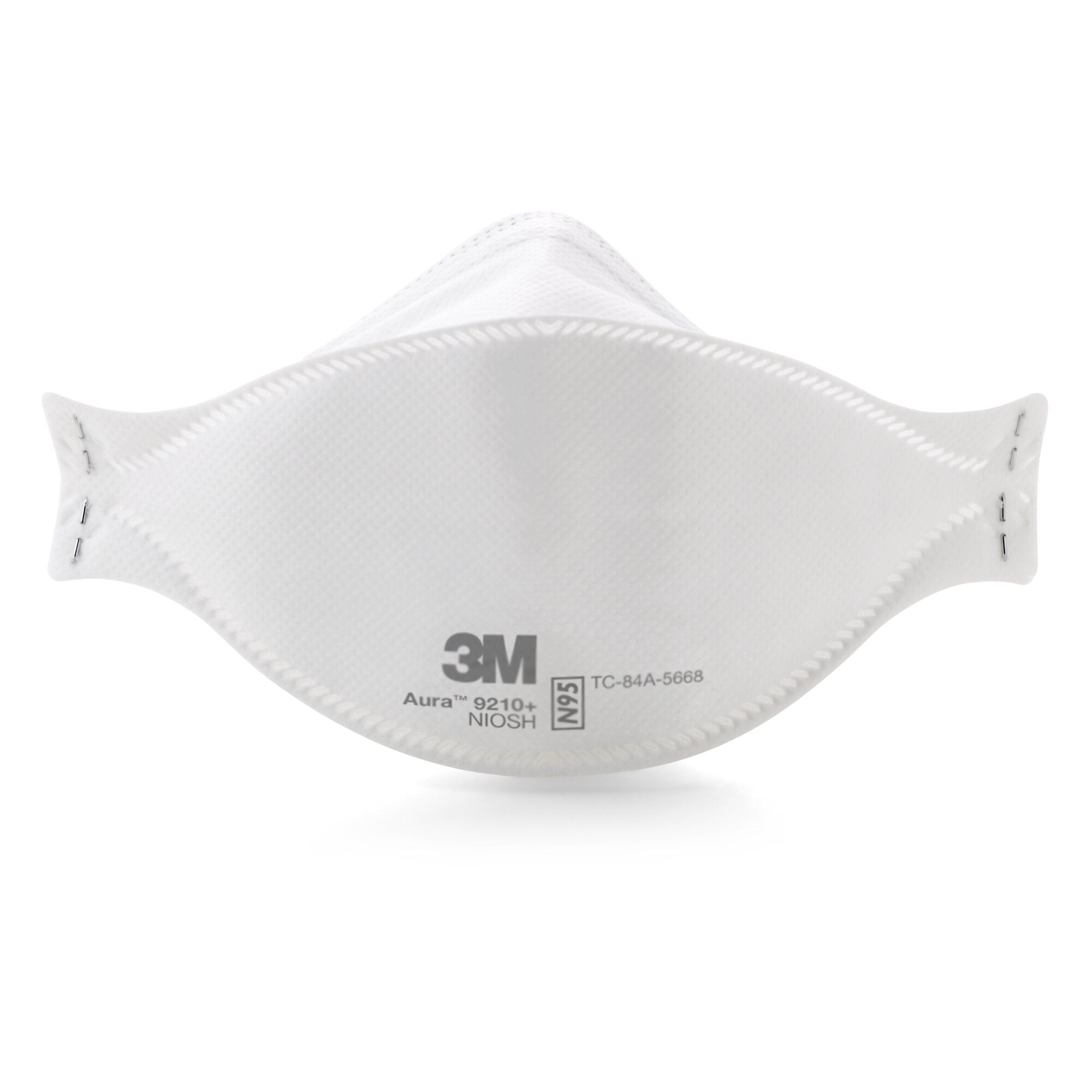
The Aura 9210+ uses a three-panel flat-fold design rather than a molded cup.
That makes it particularly appealing to workers who prefer:
- A compact flat-fold respirator
- Braided straps
- A contoured nose area
- More freedom for facial movement
- Convenient individual storage
EIO lists the Aura 9210+ for dusty applications including grinding, sanding, sweeping, and bagging.
3M VFlex 9105 N95
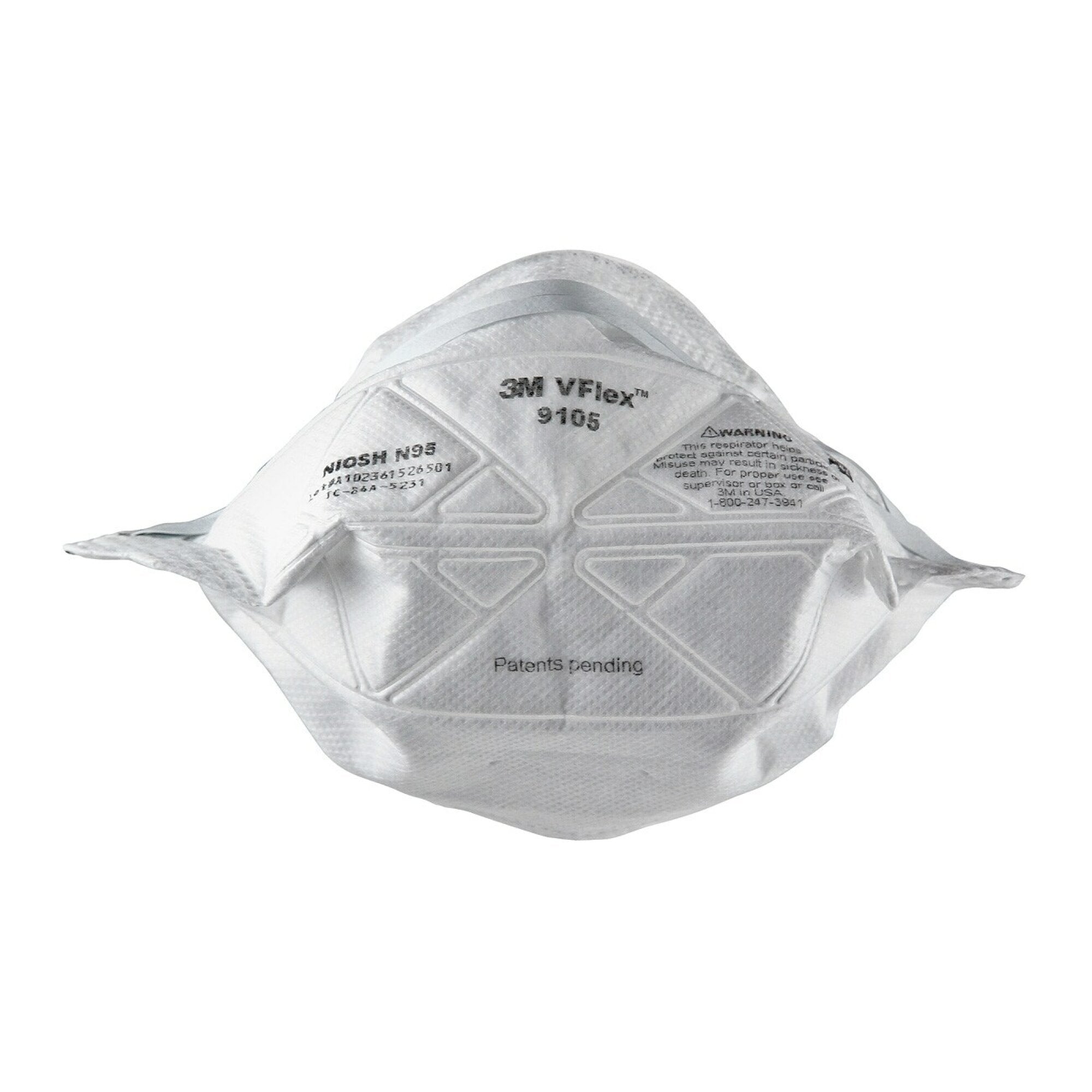
The VFlex 9105 uses V-shaped pleats that expand as the wearer breathes.
This produces a spacious interior and allows the facepiece to flex with mouth movement while talking.
For insulation contractors who wear respirators for extended periods and communicate frequently on the jobsite, that can be appealing.
Trying to decide between these two designs? Read our 3M Aura vs. VFlex comparison.
When Should You Consider N100 or P100 for Fiberglass?
For ordinary fiberglass work, higher filtration is not automatically required simply because N100 or P100 exists.
But certain workers or respiratory protection programs may call for greater particulate filtration.
3M 8233 N100
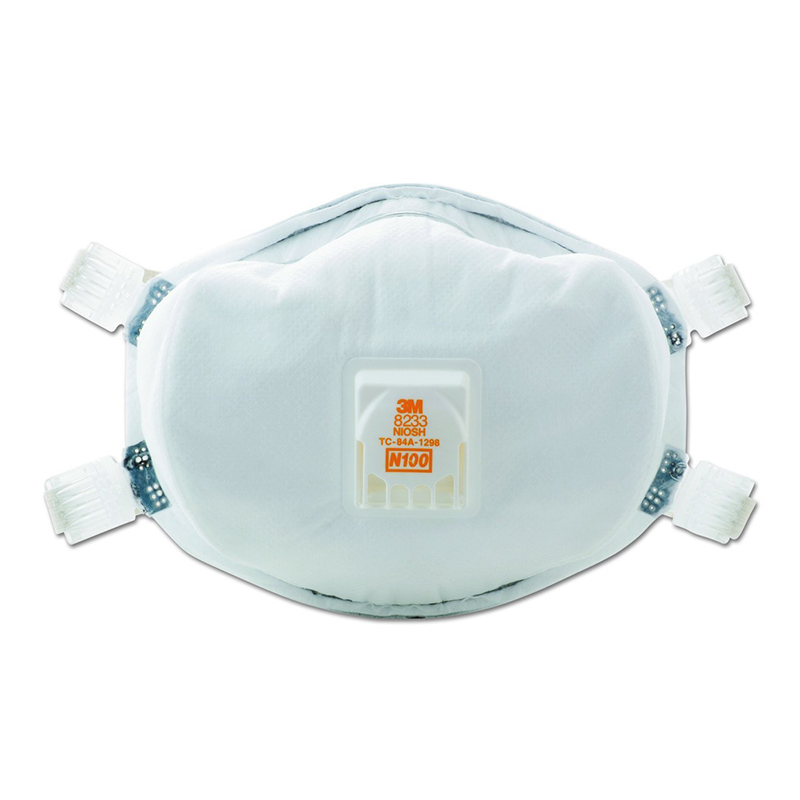
The 3M 8233 is an N100 filtering facepiece respirator that provides at least 99.97 percent filtration efficiency against certain non-oil particles.
Compared with basic N95 models, premium high-efficiency respirators may also include features such as:
- Faceseals
- Adjustable straps
- Exhalation valves
- More substantial facepiece construction
An N100 can be considered where higher particulate filtration is needed but oil aerosols are not present.
3M 8293 P100
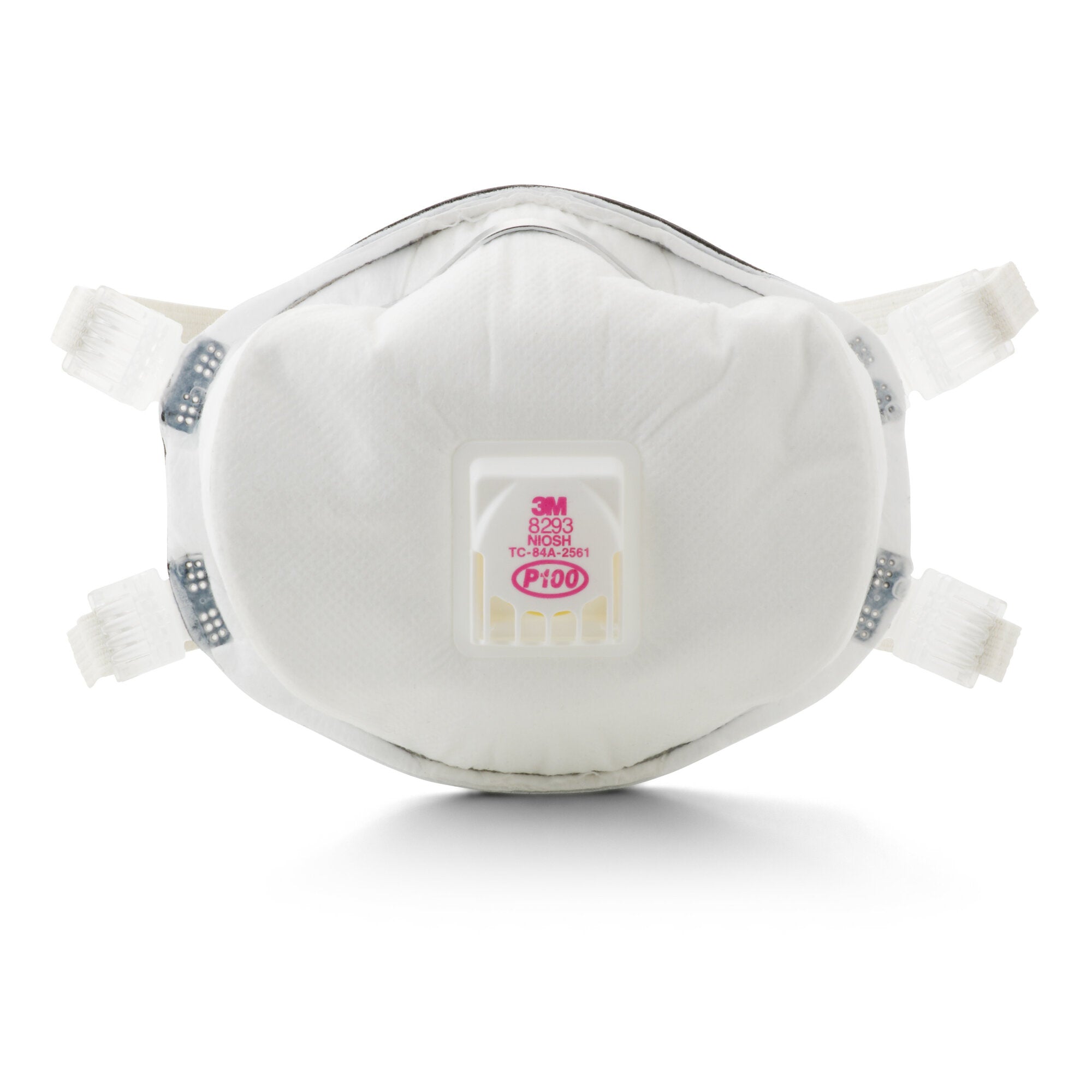
The 8293 provides at least 99.97 percent filtration efficiency against certain oil and non-oil particles.
It also includes:
- A full foam faceseal
- Adjustable buckle straps
- 3M Cool Flow Valve
- Adjustable noseclip
- Individual packaging
For a professional who needs P100 filtration, this is a substantially more feature-rich filtering facepiece than a basic disposable N95.
Again, that does not mean everyone installing fiberglass needs a P100.
The filter class should match the hazard and respiratory protection requirements.
Disposable vs. Reusable Respirators for Insulation Contractors
Someone insulating one attic may find disposable N95s perfectly practical.
A professional insulation installer wearing respiratory protection five days a week may reach a different conclusion.
A reusable half-mask respirator offers:
- Replaceable filters
- More durable facepiece construction
- Multiple filter options
- Potentially lower long-term filter costs
- Replaceable parts on many models
Reusable respirators also require regular cleaning, inspection, maintenance, and proper storage.
EIO carries disposable, reusable, filter, cartridge, and other respiratory protection options for professional applications.
Which Respirator Should You Use for Different Fiberglass Jobs?
Installing New Fiberglass Batts
For certain ordinary non-oil fiberglass particle exposures, a properly fitted N95 such as the 8200 or 8210 may be appropriate.
Eye protection, gloves, long sleeves, and ventilation should also be considered.
Cutting Fiberglass Insulation
Cutting releases additional fibers and dust near the breathing zone.
Keep cutting controlled and minimize unnecessary disturbance of the material.
An N95 specifically recommended for fiberglass insulating can be a practical choice where appropriate.
Working in a Hot Attic
This is where a valved model can become much more attractive.
The 8210V or an 8511 fiberglass-oriented model can help warm, humid exhaled air escape from the facepiece.
If valves are permitted by the workplace, that comfort improvement can be significant during long insulation jobs.
Removing Old Fiberglass Insulation
Removal deserves more caution than clean new installation.
Old attic or wall insulation may contain more than fiberglass.
Possible additional contaminants include:
- Construction dust
- Mold
- Rodent debris
- Animal waste
- Insect debris
- Other building materials
Before large-scale removal, determine what materials and contaminants are actually present.
A basic N95 should not be treated as protection against every hazard found in an old building.
Blown-In Fiberglass
Loose-fill insulation can produce substantial airborne particulate during installation.
Engineering controls, ventilation, application equipment, and an appropriate respiratory protection program become especially important for workers performing the task professionally.
Fiberglass Demolition
Demolition can mix fiberglass with drywall dust, wood dust, concrete particles, coatings, mold, and potentially hazardous legacy materials.
The respirator needs to be selected for the complete exposure—not simply the fiberglass component.
What About Asbestos?
Fiberglass and asbestos are not the same material.
However, remodeling and insulation removal can sometimes uncover older materials that were installed during periods when asbestos-containing products were common.
If asbestos is suspected, stop treating the task as ordinary fiberglass work.
Do not assume that a consumer N95 makes asbestos removal safe.
Asbestos work is subject to specific regulatory requirements, work practices, exposure controls, and respiratory protection requirements.
What About Mold in Fiberglass Insulation?
Wet insulation and building leaks can create conditions where mold grows on surrounding building materials or dust associated with the insulation.
A particulate respirator may help reduce exposure to certain airborne mold particles, but larger mold-remediation projects can require additional controls and PPE.
The extent of contamination and the material being removed should be evaluated before work begins.
What Other PPE Should You Wear With Fiberglass?
 A respirator protects only your respiratory system.
Fiberglass can irritate other parts of the body as well.
A typical PPE approach may include:
- Safety glasses or goggles
- Gloves
- Long sleeves
- Long pants
- Protective clothing where appropriate
- Respiratory protection
Overhead insulation work makes eye protection particularly important because loose fibers can fall directly toward the face.
The respirator and eyewear should also fit together without the glasses interfering with the respirator seal.
A Better Respirator Does Not Fix a Bad Fit
This point matters whether you choose N95, N100, or P100.
A tight-fitting respirator works only when air is being drawn through the filter rather than leaking around the edges.
Factors that can interfere with fit include:
- Facial hair
- Incorrect respirator size
- Damaged or stretched straps
- Improper noseclip adjustment
- Poor donning technique
- Eyewear interfering with the sealing surface
Where respirator use is required in the workplace, applicable OSHA respiratory-protection requirements include fit testing, medical evaluation, training, and other program elements.
Can You Wear an N95 With a Beard?
If facial hair passes between the respirator and the skin where the facepiece needs to seal, the respirator may not achieve an adequate seal.
Moving from N95 to P100 does not solve that problem.
Higher filtration media cannot compensate for contaminated air leaking around the facepiece.
How Often Should You Replace a Fiberglass Respirator?
There is no single number of hours that applies to every disposable respirator.
Replace the respirator when it becomes:
- Dirty
- Damaged
- Wet
- Contaminated
- Difficult to breathe through
- Unable to maintain an acceptable seal
Heavy fiberglass dust can load the filter more quickly than a relatively clean work environment.
Do not wash disposable N95s or attempt to blow dust out of them with compressed air.
If reuse is permitted, store the respirator so it remains clean, dry, protected from deformation, and assigned to the same individual wearer.
For more detail, read How Long Does an N95 Respirator Last? and Can You Reuse an N95 Respirator?
Frequently Asked Questions About Fiberglass Respirators
Do you need a respirator for fiberglass insulation?
Respiratory protection is commonly used to reduce inhalation of airborne fiberglass particles during cutting, installing, handling, and removal. The exact PPE needed depends on the work and exposure conditions.
Is an N95 good for fiberglass?
Yes, an N95 may be appropriate for certain fiberglass particle exposures. 3M specifically lists fiberglass insulating as an application for respirators such as the 8210.
Does the 3M 8210 work for fiberglass?
3M specifically identifies fiberglass insulating among the potential applications for the 8210 N95.
What is the best 3M mask for fiberglass insulation?
There is no universal best model. The 8200H-series is marketed specifically for sanding and fiberglass projects, the 8210 is a versatile general-purpose N95, and the 8511H-series adds an exhalation valve for comfort.
Should I use N95 or P100 for fiberglass?
An N95 may be adequate for certain fiberglass exposures, while P100 provides higher filtration efficiency and oil resistance. Select the rating according to the workplace hazard assessment rather than assuming P100 is always necessary.
Is N100 better than N95 for fiberglass?
N100 provides higher minimum particulate filtration efficiency—99.97 percent rather than 95 percent. Whether that additional efficiency is needed depends on the application.
Is P100 better than N100?
Both provide at least 99.97 percent particulate filtration efficiency. P100 is also strongly resistant to oil aerosols, while N100 is not resistant to oil.
Is a valved respirator better for insulation?
A valve may improve comfort by allowing warm, moist exhaled air to escape more easily. It does not increase the N95 filtration rating.
What respirator should I wear in an attic?
The answer depends on the contaminants present. New fiberglass installation may involve primarily fiberglass particulate, while older attics may also contain dust, mold, animal waste, or other building materials.
Can fiberglass get through an N95?
An NIOSH-approved N95 is designed to provide at least 95 percent filtration efficiency against the applicable test aerosol when properly fitted and used. Fit is critical because air leaking around the facepiece bypasses the filter.
Can you reuse an N95 after working with fiberglass?
Reuse may be possible if permitted by the manufacturer and workplace program and if the respirator remains clean enough, dry, undamaged, functional, and capable of maintaining an acceptable seal.
Can I wash fiberglass dust out of an N95?
No. Disposable N95 respirators are not designed to be washed. Replace a respirator that becomes excessively dirty or contaminated.
Should I wear goggles while installing fiberglass?
Eye protection is strongly worth considering because airborne and falling fibers can irritate the eyes, particularly during overhead installation.
Does an N95 protect against asbestos?
Do not treat suspected asbestos work as ordinary fiberglass installation. Asbestos is governed by specific workplace requirements and requires a separate hazard assessment and appropriate controls.
Does an N95 protect against mold in old insulation?
An N95 can filter certain airborne particles, including mold spores, but the appropriate protection for remediation depends on the extent of contamination and the overall environment.
Shop 3M Respirators for Fiberglass at EIO
For many ordinary fiberglass-insulation projects, an N95 is the logical place to begin.
For a respirator packaged specifically for sanding and fiberglass projects, consider the 3M 8200H10-DC Sanding and Fiberglass Respirator.
For a versatile professional N95 that 3M specifically recommends for fiberglass insulating, look at the 3M 8210 N95.
If you're working in a hot attic or physically demanding environment, the 3M 8210V adds an exhalation valve for greater comfort.
For workers who prefer flat-fold designs, consider the 3M Aura 9210+ or 3M VFlex 9105.
And where the hazard assessment calls for P100 particulate filtration, the 3M 8293 P100 provides 99.97 percent particulate filtration efficiency along with a faceseal, adjustable straps, and exhalation valve.
Browse disposable respirators at EIO or continue with the EIO Respiratory Protection Knowledge Center:
- Complete Guide to 3M Disposable Respirators
- N95 vs. P95 vs. P100 Respirators
- Best Respirator for Silica Dust
- 3M Aura vs. VFlex Respirators
- How Long Does an N95 Respirator Last?
- Valved vs. Non-Valved N95 Respirators
- Best Respirator for Woodworking
- Best Respirator for Welding
- Can You Reuse an N95 Respirator?
Respirator Safety Disclaimer
This article provides general educational information and is not a substitute for a workplace hazard assessment, exposure monitoring, manufacturer instructions, Safety Data Sheets, professional safety advice, or an employer's respiratory protection program.
Insulation and renovation work may involve contaminants other than fiberglass, including mold, construction dust, animal waste, chemicals, and hazardous legacy building materials. Respirator selection must account for the complete exposure rather than fiberglass alone.
Disposable particulate respirators do not provide oxygen and do not automatically protect against hazardous gases, vapors, asbestos, oxygen-deficient atmospheres, or other contaminants for which the respirator is not approved.
Where respirator use is required in a U.S. workplace, follow applicable OSHA respiratory protection requirements, including medical evaluation, training, fit testing, proper use, and storage.