


 Welding produces more than sparks and heat.
Depending on the process, metal, coating, filler material, and ventilation, welding can generate a complex mixture of airborne metal fumes, gases, vapors, and extremely fine particles.
That makes choosing a respirator for welding more complicated than simply reaching for the same N95 you might use for sanding or woodworking.
Can you use an N95 for welding? Is a P100 better? What makes a welding specific respirator different? When do you need a reusable respirator instead of a disposable one?
The answer depends on the exact welding operation.
This guide explains how welding respiratory protection works, when disposable 3M welding respirators may be appropriate, and when a higher level or different type of protection should be considered.
If you're new to respiratory protection, start with our Complete Guide to 3M Disposable Respirators. You can also review our N95 vs. P95 vs. P100 guide for a deeper explanation of particulate filter ratings.
What Are Welding Fumes?
 Welding fumes are formed when metals are heated to very high temperatures and some of the material vaporizes. As that vapor cools, it condenses into extremely fine airborne particles.
The composition of those fumes depends on what you're welding.
Potential contaminants can vary according to:
- The base metal
- Filler wire or electrode
- Welding process
- Surface coatings
- Paint
- Plating
- Rust inhibitors
- Cleaning chemicals
- Shielding gases
- Ventilation
That is why there is no single respirator that can be called the best choice for every welder.
A worker performing mild steel MIG welding in a well ventilated fabrication shop may face a very different exposure than someone welding stainless steel inside a confined space.
Why Welding Fumes Require Careful Respirator Selection
Welding fumes can contain a variety of metals and compounds depending on the work being performed.
OSHA identifies welding fumes and gases as occupational hazards and emphasizes the importance of ventilation, engineering controls, and appropriate respiratory protection when exposures cannot otherwise be adequately controlled.
Potential welding contaminants may include compounds associated with metals such as:
- Iron
- Manganese
- Chromium
- Nickel
- Zinc
- Copper
- Lead
- Cadmium
Some welding operations can also create gases such as ozone and nitrogen oxides.
This matters because particulate respirators filter particles; they do not automatically protect against hazardous gases and vapors.
Can You Use an N95 Respirator for Welding?
 In some welding applications, yes.
3M manufactures disposable N95 respirators specifically intended for certain welding and metal fume applications.
The key word is specifically.
A welding specific N95 may include features that make it more appropriate around welding sparks, heat, and metal fumes than a general purpose dust respirator.
The 3M 8515 N95 Welding Respirator, for example, is designed for certain welding applications and uses flame resistant materials along with a 3M Cool Flow™ Exhalation Valve.
3M describes the 8515 as an economical option for welders and notes its flame resistant construction and Cool Flow Valve.
However, an N95 should not be assumed to provide enough protection for every welding exposure.
Higher contaminant concentrations, certain metals, gases, vapors, coatings, confined space work, or other workplace conditions may require different respiratory protection.
What Makes a Welding Respirator Different?
A standard disposable respirator may filter particles effectively but still lack features that are useful around welding operations.
Welding specific respirators may add features such as:
- Flame resistant outer materials
- Low profile construction for use under welding helmets
- Exhalation valves to reduce heat buildup
- Faceseals on certain models
- Adjustable straps or noseclips
- Relief from nuisance level odors or ozone on certain specialty models
For example, 3M lists the 8212 and 8214 welding respirators as N95 models with faceseals, exhalation valves, and flame resistance.
These features don't replace proper respirator selection, but they can make a respirator better suited to the demands of a welding environment.
When Should You Consider P100 Protection for Welding?
P100 filters provide at least 99.97 percent particulate filtration efficiency under NIOSH test conditions and are strongly resistant to oil aerosols.
That higher filtration efficiency can make P100 an important option for certain welding and metalworking applications when the hazard assessment calls for it.
However, P100 is not automatically required for every welding job.
Potential reasons to consider P100 protection include:
- The exposure assessment requires higher particulate filtration.
- The welding process produces substantial fine particulate.
- Oil aerosols are also present.
- The respiratory protection program specifies P100.
- A reusable respirator is being used with replaceable particulate filters.
The 3M 8293 P100 is one disposable P100 option available from EIO.
For welding environments, however, reusable half-mask systems with P100 filters can also provide a more practical long term solution depending on the application.
When Is a Reusable Respirator Better for Welding?
Disposable respirators work well for certain applications, but frequent welders may benefit from reusable respiratory protection.
A reusable half-mask respirator can accept replaceable filters and cartridges selected for the specific contaminants involved.
This can be useful when:
- Welding is performed daily.
- Higher filtration efficiency is required.
- Filters need to be replaced independently of the facepiece.
- Multiple hazards require combination cartridges or filters.
- The worker needs a more durable respirator for extended use.
3M specifically promotes reusable half-facepiece respirators paired with P100 filters for welding and metalworking applications.
The correct filter or cartridge still depends on the actual contaminants.
A P100 filter captures particulates. It does not automatically protect against gases or vapors simply because it attaches to a reusable respirator.
3M Welding Respirator Comparison
| 3M Model | Rating | Valve | Faceseal | Notable Feature |
|---|---|---|---|---|
| 3M 8515 | N95 | Yes | No | Economical welding specific option with flame resistant construction |
| 3M 8212 | N95 | Yes | Yes | Faceseal, adjustable noseclip, flame resistance |
| 3M 8214 | N95 | Yes | Yes | Nuisance level organic vapor relief and welding oriented features |
| 3M 8293 | P100 | Yes | Yes | Higher efficiency particulate filtration |
| Reusable Half Mask + P100 Filter | Depends on filter | Model dependent | Yes | Replaceable filters and broader configuration options |
This table is for general comparison only. Respirator selection must be based on the actual contaminant, concentration, workplace conditions, required protection factor, fit, and manufacturer instructions.
3M 8515 N95 Welding Respirator
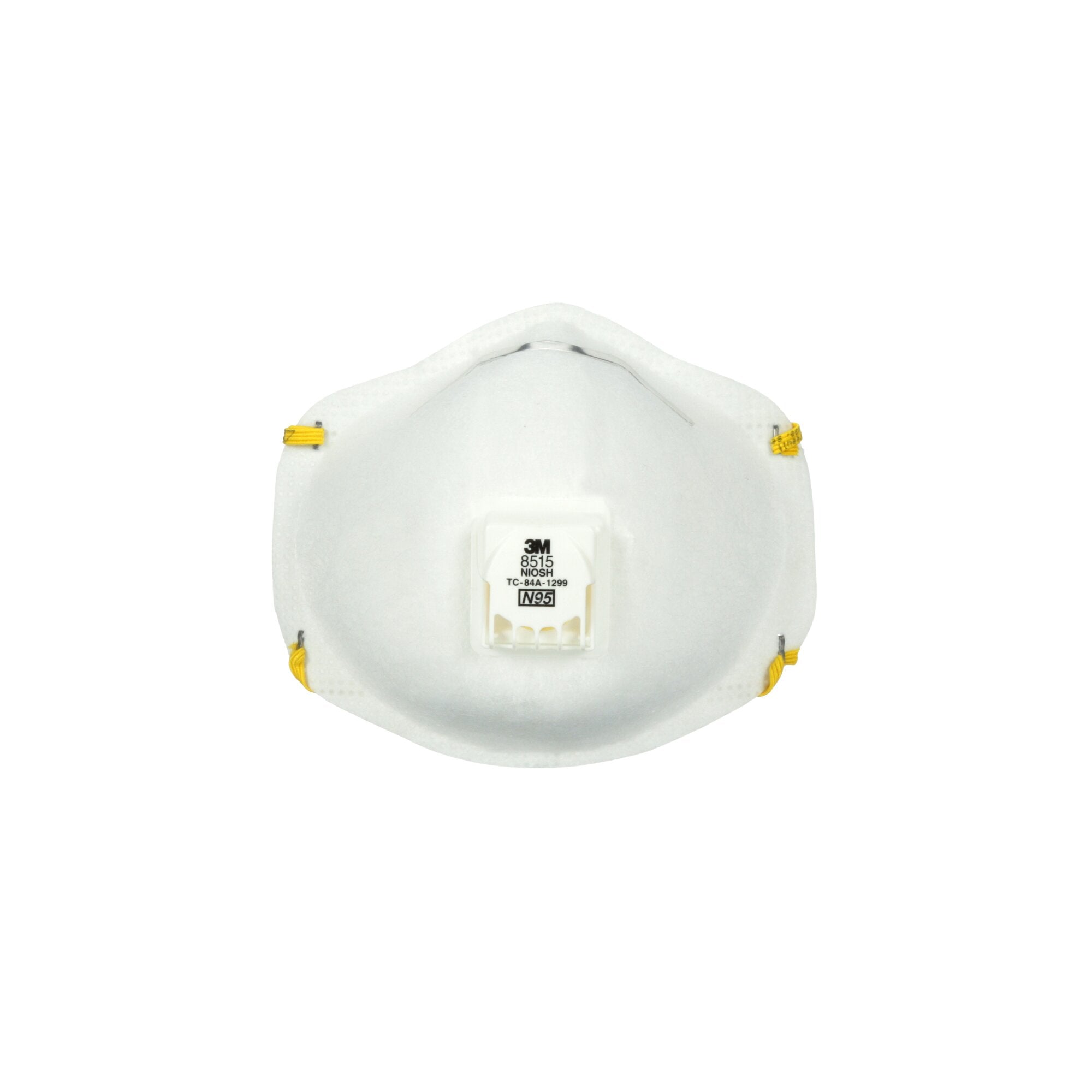
If you're looking specifically for a disposable welding respirator, the 8515 is one of the most recognizable options in the 3M lineup.
3M positions it as an economical respirator for certain welding operations.
Key features include:
- NIOSH approved N95 filtration
- 3M Cool Flow Exhalation Valve
- Flame resistant construction
- Adjustable nose clip
- Braided headbands
- Low profile shape designed to work with welding PPE
The Cool Flow Valve can be particularly helpful because welding environments are already hot.
Add a welding helmet, jacket, gloves, and physically demanding work, and heat buildup inside a respirator can become uncomfortable quickly.
The valve helps warm, moist exhaled air leave the respirator more readily.
If you want a deeper explanation of how valves affect respirator comfort, see our Valved vs. Non-Valved N95 Respirator Guide.
What About the 3M 8212 and 8214?
3M also offers more specialized disposable N95 respirators for welding and metalworking.
3M 8212 Particulate Welding Respirator, N95 with Faceseal
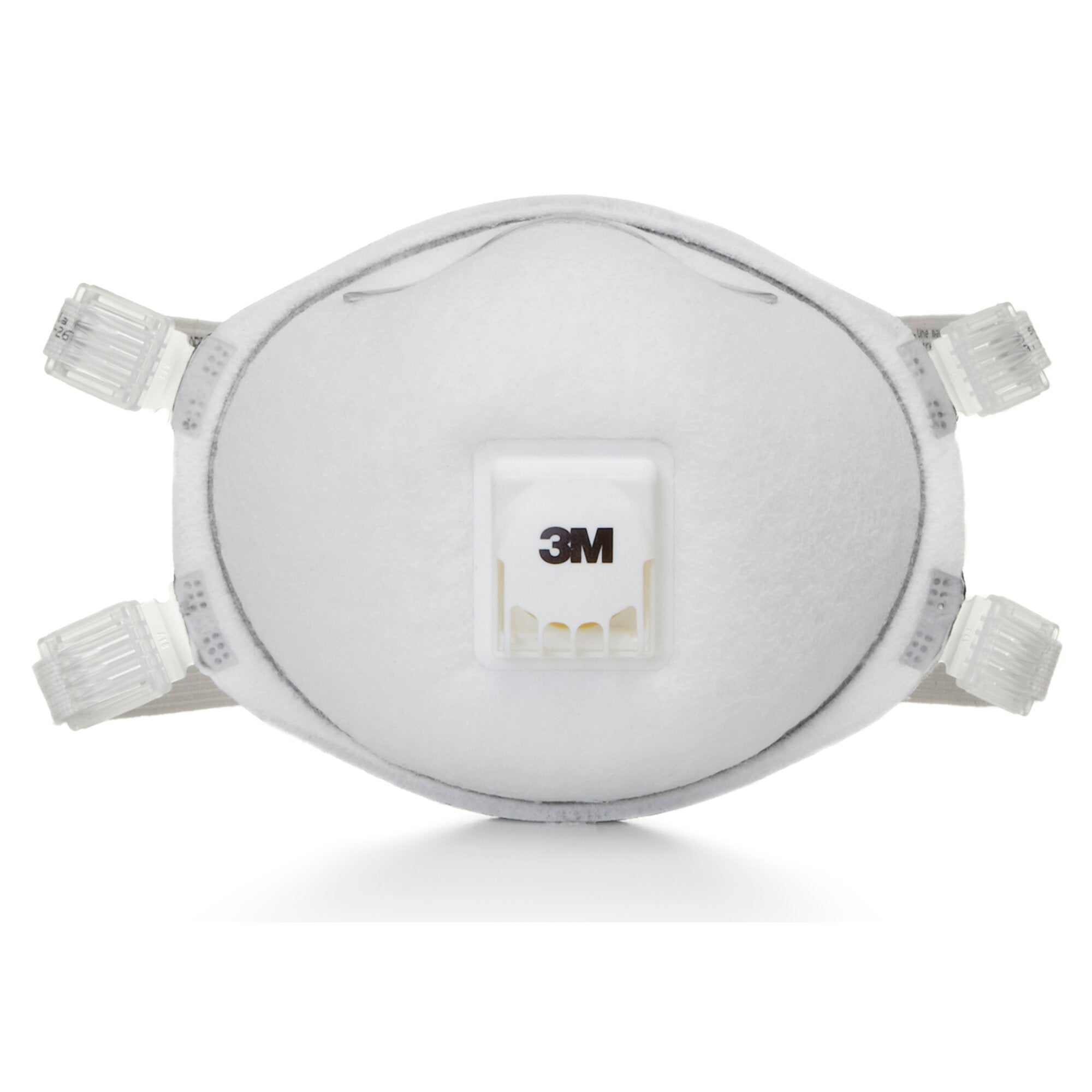
The 8212 includes:
- N95 filtration
- Flame resistant construction
- Exhalation valve
- Full faceseal
- Adjustable noseclip
3M markets the model for certain welding applications where metal fumes are present.
3M 8214 Particulate Welding Respirator, N95
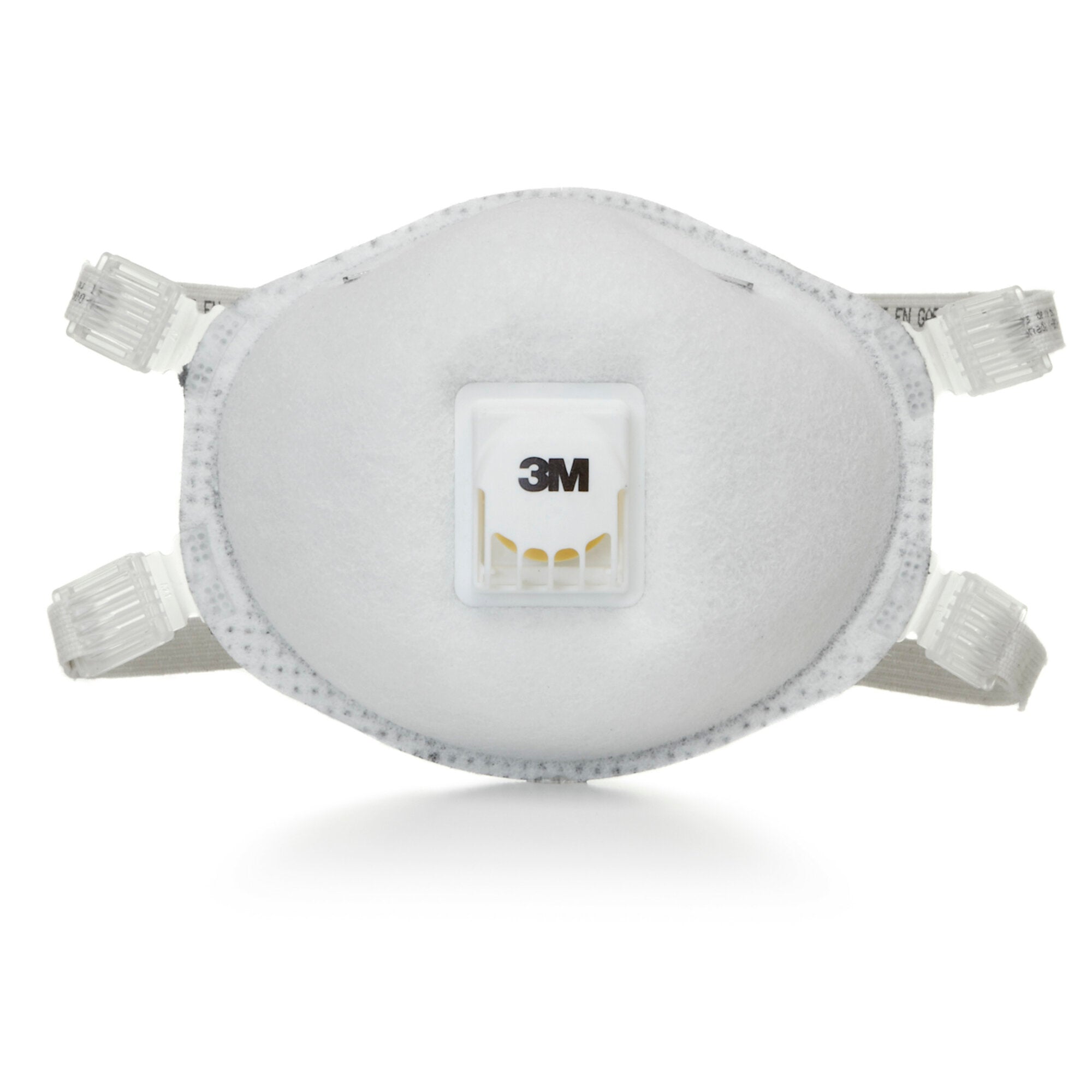
The 8214 takes that concept further.
It includes N95 particulate filtration, a faceseal, flame resistance, an exhalation valve, and relief from nuisance levels of certain organic vapors.
3M specifically describes it as suitable for certain applications involving metal fumes, ozone, and nuisance level organic vapors.
Nuisance level relief does not mean protection against hazardous concentrations of organic vapors.
If organic vapor concentrations exceed applicable exposure limits or otherwise require respiratory protection, a properly selected gas and vapor cartridge or another respirator type may be necessary.
Is the 3M 8515 Better Than a Regular N95 for Welding?
For certain welding tasks, yes, because it is designed specifically with welding in mind.
A standard N95 may have the same basic N95 particulate classification, but the 8515 adds features relevant to welding environments, including flame resistance and a Cool Flow Valve.
That doesn't mean the 8515 provides more than N95 filtration simply because it says "welding" on the package.
The advantage is that the respirator is designed around the physical environment in which welders work.
Which Respirator for Different Welding Applications?
Mild Steel MIG Welding
For certain mild steel MIG applications with adequate ventilation and an exposure assessment supporting N95 protection, a welding specific N95 such as the 8515 may be appropriate.
Higher exposures or different workplace conditions may require greater protection.
Mild Steel Stick Welding
Stick welding can generate substantial visible fume, particularly depending on electrode type and work conditions.
Local exhaust ventilation and appropriate respiratory protection should be evaluated carefully.
A disposable welding respirator may be suitable for some tasks, while others may justify reusable or higher efficiency protection.
Stainless Steel Welding
Stainless steel welding requires additional caution because the fumes may contain chromium and nickel compounds.
Respirator selection should be based on exposure monitoring and applicable workplace requirements rather than assuming that any disposable N95 is sufficient.
Higher efficiency or more protective respirator systems may be required depending on exposure.
Galvanized Steel Welding
Welding galvanized steel can generate zinc oxide fumes.
Proper ventilation and exposure control are especially important.
Again, respirator selection depends on airborne concentration and the complete hazard assessment.
Welding Painted or Coated Metal
Before welding through paint, primer, plating, or another coating, determine what that coating contains.
Heating coatings can create hazards very different from the metal underneath.
The Safety Data Sheet and workplace hazard assessment should be reviewed before selecting respiratory protection.
A particulate only N95 may not address every contaminant produced.
Confined-Space Welding
Confined spaces require a very different level of planning.
Ventilation, atmospheric testing, oxygen concentration, toxic gases, rescue procedures, and supplied air requirements may all need to be evaluated.
A disposable N95 should never be assumed to make confined space welding safe.
What About Ozone?
Certain welding processes can generate ozone.
Ozone is a gas, which is an important distinction because a standard particulate filter does not function like a gas and vapor cartridge.
Some specialty 3M welding respirators are recommended for ozone protection under specific conditions and limitations.
This is exactly why the specific model and approval matter.
Do not assume that every N95 protects against ozone simply because it is sold for welding.
What About Welding Fumes and P100 Filters?
 P100 filtration can be valuable when the respiratory protection program calls for higher particulate filtration.
One common approach for frequent welding work is a reusable half-mask respirator with P100 filters.
3M specifically promotes products such as its Rugged Comfort reusable half-facepiece systems with P100 filters for welding applications.
Benefits can include:
- Replaceable filters
- More durable facepiece construction
- Potentially better long term economics for frequent users
- Multiple filter and cartridge options
- Availability in different facepiece sizes
A reusable respirator still needs to fit properly and be cleaned, inspected, stored, and maintained according to the manufacturer's instructions.
Will a Respirator Fit Under a Welding Helmet?
This is one reason low profile welding respirators exist.
A bulky respirator can interfere with helmet clearance, headgear, eyewear, or other PPE.
Disposable welding respirators such as the 8515 are designed with welding use in mind and can provide a relatively low profile option.
3M also offers reusable respirator systems specifically promoted for compatibility with 3M Speedglas™ welding helmets.
Whenever multiple pieces of PPE are worn together, evaluate them as a complete system.
The welding helmet should not push on the respirator or disturb the face seal.
Disposable vs. Reusable Respirators for Welders
| Factor | Disposable Welding Respirator | Reusable Half Mask |
|---|---|---|
| Initial cost | Lower | Higher |
| Maintenance | Minimal | Cleaning and inspection required |
| Filter replacement | Replace entire respirator | Replace filters/cartridges separately |
| Configuration options | Limited | Broad range of filters and cartridges |
| Best suited for | Certain intermittent or straightforward particulate applications | Frequent use or applications requiring specialized filters/cartridges |
Fit Matters Just as Much for Welders
Welding PPE can make respirator fit more challenging.
You're often wearing:
- A welding helmet
- Safety glasses
- Hearing protection
- A hood or cap
- Protective clothing
None of this equipment should interfere with the respirator's sealing surface.
Where a tight fitting respirator is required, proper fit testing should be performed with the same make, model, style, and size that will actually be used.
A user seal check should also be performed each time the respirator is donned.
Can Welders Have Beards?
A tight fitting respirator cannot seal correctly if facial hair passes between the face and the sealing surface.
This applies whether the respirator is an N95, P100, reusable half mask, or another tight fitting design.
Workers who cannot achieve an adequate seal may need to be evaluated for another type of respiratory protection appropriate for the hazard.
How Long Does a Welding Respirator Last?
Disposable respirators don't have a universal number of hours after which they automatically expire during use.
Replace a disposable welding respirator if it becomes:
- Dirty
- Damaged
- Wet
- Contaminated
- Difficult to breathe through
- Deformed
- Unable to maintain a proper seal
Heavy welding fume can load a filter more quickly than a cleaner working environment.
For a deeper explanation of wear life, reuse, storage, and shelf life, read How Long Does an N95 Respirator Last?.
Frequently Asked Questions About Welding Respirators
What is the best respirator for welding?
There is no single best respirator for every welding application. The correct choice depends on the welding process, metals, coatings, airborne concentrations, ventilation, gases, vapors, and required protection factor.
Can you weld with an N95 respirator?
Certain welding-specific N95 respirators, such as the 3M 8515, are designed for some welding applications. An N95 is not sufficient for every welding exposure.
Is the 3M 8515 good for welding?
The 3M 8515 is specifically designed as an N95 welding respirator and includes flame-resistant construction and a Cool Flow Exhalation Valve. 3M markets it as an economical option for certain welding applications.
Do I need a P100 for welding?
Not automatically. P100 provides higher particulate filtration than N95, but the required rating depends on the hazard assessment and exposure level.
Is P100 better than N95 for welding fumes?
P100 provides higher particulate filtration efficiency, but that alone does not make it the correct choice for every welding environment. Gas and vapor hazards must also be considered separately.
Does an N95 protect against metal fumes?
Certain N95 welding respirators are designed for specific metal fume applications. The exact model, contaminant, and exposure concentration determine suitability.
Does an N95 protect against welding gases?
No. N95 refers to particulate filtration. It does not automatically provide protection against hazardous welding gases or vapors.
Do welding respirators protect against ozone?
Some specialty respirators may be recommended for ozone protection under defined conditions, but a standard N95 should not be assumed to protect against ozone. Always verify the exact product approval and user instructions.
Can I wear a regular 3M 8210 while welding?
A general purpose 8210 is an N95 particulate respirator, but it lacks the welding specific flame resistant features found on products such as the 8515. Select a respirator specifically approved and appropriate for the welding exposure.
Is a reusable respirator better for welding?
For frequent welding, a reusable half-mask respirator can offer advantages such as replaceable P100 filters, multiple cartridge options, and a durable facepiece. Whether it is better depends on the specific hazard and workplace program.
Can I weld stainless steel with an N95?
Do not assume that an N95 is sufficient. Stainless steel welding can generate chromium and nickel containing fumes, and respirator selection should be based on exposure assessment and applicable requirements.
What respirator should I use for galvanized welding?
Galvanized steel can generate zinc oxide fumes. The required respiratory protection depends on exposure level, ventilation, welding process, and applicable workplace requirements.
Can I wear a respirator under a welding hood?
Yes, many respirators are designed to work with welding helmets, but the helmet must not interfere with the respirator's seal. Low profile welding specific models can help with clearance.
Do welders need fit testing?
When employees are required to use tight fitting respirators under applicable OSHA requirements, fit testing is generally required for the same make, model, style, and size that will be worn.
Shop 3M Welding Respirators at EIO
The right welding respirator depends on more than whether you prefer N95 or P100.
You need to understand what you're welding, what contaminants are being generated, how much ventilation is available, and what level of respiratory protection the exposure requires.
For certain welding applications where an N95 is appropriate, the 3M 8515 N95 Welding Respirator is a purpose-built option with flame resistant construction and a Cool Flow Valve.
For applications requiring higher particulate filtration, the 3M 8293 P100 provides 99.97 percent particulate filtration efficiency against certain oil and non-oil particles.
Frequent welders may also want to explore reusable and powered respiratory protection at EIO for additional filter, cartridge, and facepiece options.
Continue exploring the EIO Respiratory Protection Knowledge Center:
N95 vs. P95 vs. P100 Respirators: What’s the Difference?
The Complete Guide to 3M Disposable Respirators: Choosing the Right Protection for Your Job
3M Aura vs. VFlex: Which N95 Respirator Should You Choose?
How Long Does an N95 Respirator Last? When to Replace Your Respirator
Can You Reuse an N95 Respirator? Storage & Replacement Guide
Valved vs. Non-Valved N95 Respirators: Which Is Better?
Best Respirator for Woodworking: N95, P100, and 3M Options Explained
Best Respirator for Welding: 3M N95, P100, and Welding-Specific Options Explained
Best Respirator for Fiberglass Insulation: N95, N100 & P100
Respirator Safety Disclaimer
This article provides general educational information and is not a substitute for a workplace hazard assessment, exposure monitoring, Safety Data Sheets, manufacturer user instructions, professional safety advice, or an employer's respiratory protection program.
Welding can generate a complex mixture of particulates, gases, vapors, and metal fumes. Respirator selection must consider the welding process, base metal, filler material, coatings, contaminants, airborne concentrations, ventilation, work conditions, required protection factor, and applicable regulations.
Disposable particulate respirators do not provide oxygen and should not be used in oxygen-deficient atmospheres, immediately dangerous to life or health conditions, or for gases or vapors for which they are not approved.
Where respirator use is required in a U.S. workplace, follow applicable OSHA respiratory protection requirements, including medical evaluation, training, fit testing, and proper use.