


You put on an N95 respirator at the beginning of a shift. A few hours later, it still looks clean, the straps are intact, and breathing through it feels normal.
Do you need to throw it away?
Or can you use it again tomorrow?
It's one of the most common questions surrounding disposable respirators, and the answer is not as simple as "eight hours," "one shift," or "one use."
For many N95 filtering facepiece respirators, there is no universal time limit that says the respirator automatically stops working after a certain number of hours. Instead, replacement depends on the respirator's condition, the contaminants involved, breathing resistance, workplace procedures, manufacturer instructions, and how the respirator has been used.
There's also an important difference between how long an N95 can be worn and the shelf life of an unused N95. Those are two completely different things.
Let's break it down.
If you're new to respiratory protection, you may also want to start with our Complete Guide to 3M Disposable Respirators.
How Long Does an N95 Respirator Last?

There isn't a single answer that applies to every N95 and every workplace.
According to 3M's guidance, an N95 filtering facepiece respirator can generally continue to be worn until it becomes dirty, damaged, or difficult to breathe through, unless the manufacturer, workplace respiratory protection program, contaminant, or applicable regulation requires earlier replacement.
That means an N95 doesn't necessarily become unusable simply because you've worn it for several hours.
At the same time, "it still looks okay" isn't enough to determine whether a respirator should remain in service.
The environment matters.
A respirator worn briefly in a relatively clean environment has experienced very different conditions than one worn for hours while grinding concrete, sanding drywall, sweeping a dusty production floor, or working around contaminants that may deposit on its surface.
When Should You Replace an N95 Respirator?
As a general rule, stop using a disposable N95 and replace it when any of the following occurs:
- The respirator becomes visibly dirty or soiled.
- The respirator becomes damaged or torn.
- The respirator becomes wet.
- Breathing through the respirator becomes noticeably more difficult.
- The straps become stretched, broken, or damaged.
- The nose clip becomes damaged.
- The respirator becomes crushed or permanently deformed.
- It no longer seals properly against your face.
- The respirator becomes contaminated in a way that makes reuse inappropriate.
- The manufacturer's instructions require replacement.
- Your employer's respiratory protection program requires replacement.
One of the easiest habits to develop is simply inspecting the respirator every time before putting it on.
Look at the filter material. Check the straps. Inspect the nose clip. Make sure the respirator has maintained its shape.
Then perform the required user seal check after putting it on.
If something doesn't look or feel right, replacing a disposable respirator is generally a much better decision than trying to squeeze another shift out of it.
Can You Reuse an N95 Respirator?
 In some circumstances, yes.
The word disposable can cause some confusion here. It means the filtering facepiece isn't designed to be cleaned and maintained like a reusable elastomeric respirator with replaceable filters.
It doesn't necessarily mean that every N95 must be discarded immediately after removing it once.
3M states that N95 filtering facepiece respirators may be reused until they become dirty, damaged, or difficult to breathe through, subject to the applicable user instructions and workplace requirements.
However, reuse may not be appropriate for every contaminant or workplace.
Factors that can affect whether reuse is appropriate include:
- The contaminant involved
- How heavily contaminated the respirator becomes
- Whether the respirator can be safely handled after use
- Whether its shape and seal remain intact
- Hygiene considerations
- Manufacturer instructions
- Employer procedures
- Applicable occupational safety requirements
An N95 should also never be shared between workers. Fit and hygiene considerations make respirators personal protective equipment for an individual wearer.
Do You Have to Throw Away an N95 After One Shift?
Not automatically.
There is no blanket rule stating that every N95 must be discarded after exactly eight hours or at the end of every work shift.
In some workplaces, however, single shift use may be the employer's policy because of the contaminants involved, hygiene concerns, workplace procedures, or other exposure considerations.
That's an important distinction.
The filter doesn't have an invisible eight-hour timer inside it.
But that also doesn't mean a worker should decide independently to continue reusing a respirator indefinitely.
Occupational respirator use needs to follow the manufacturer's instructions and the employer's respiratory protection program.
Why Does an N95 Become Harder to Breathe Through?
An N95 works by capturing airborne particles in its filter media.
As particles accumulate on and within that material, airflow resistance can increase. Eventually, the wearer may notice that breathing requires more effort.
When that happens, the respirator should be replaced.
How quickly a filter loads depends heavily on the environment.
Consider two workers wearing the same 3M 8210 N95.
One is performing occasional maintenance in a relatively clean facility. The other is performing a dusty operation for several hours.
Even though they're wearing the exact same model, the respirators may not have the same usable service life.
Dust concentration, particle characteristics, work rate, humidity, and exposure duration can all influence how quickly a respirator becomes loaded.
What If My N95 Gets Dirty or Wet?
Replace it.
Disposable N95 respirators aren't designed to be washed, scrubbed, sprayed with cleaner, or thrown into the laundry.
Water, cleaning products, physical handling, and other attempts at cleaning can damage filter media or other respirator components.
A respirator that is dirty, wet, damaged, or otherwise compromised should be discarded according to the manufacturer's instructions and workplace procedures.
This is another reason storage matters. Throwing an N95 loose into a toolbox, work truck, pocket, or tool bag can deform or contaminate it before you ever have a chance to reuse it.
How Should You Store an N95 Between Uses?
If reuse is permitted, storage should protect the respirator from damage and contamination.
3M recommends storing respirators in a clean environment where they will not become crushed or distorted. A clean, breathable bag can be used for storage between multiple uses.
A few practical rules:
- Keep the respirator somewhere clean and dry.
- Protect it from dirt and contamination.
- Don't crush or crumple it.
- Don't stuff it into a pocket.
- Don't place heavy tools on top of it.
- Protect the straps from stretching or damage.
- Store it so the face sealing surfaces maintain their shape.
- Follow the storage instructions supplied with the specific respirator.
Flat-fold respirators can make storage particularly convenient.
The 3M VFlex 9105 N95, for example, uses a flat fold design intended for convenient storage before use. The 3M Aura 9211+ N95 is individually packaged and also folds flat, making it convenient for toolboxes, service vehicles, lockers, and jobsite PPE supplies.
For a closer comparison of these two designs, read our 3M Aura vs. VFlex respirator guide.
Do N95 Respirators Expire?
Yes. This is where we need to separate wear time from shelf life.
An unused N95 doesn't last forever simply because the package has never been opened.
Respirators contain more than filter media. They may include:
- Elastic straps
- Nose foam
- Nose clips
- Adhesives
- Valves
- Structural materials
Those components can change with age and storage conditions.
Manufacturers therefore establish a shelf life based on the complete respirator, not simply its filter.
The expiration or "use by" information should be found on the respirator packaging along with required storage conditions.
3M recommends disposing of filtering facepiece respirators once their stated use-by date has expired.
How Long Is the Shelf Life of a 3M N95?
It depends on the model.
Many of 3M's most familiar disposable N95 respirators have a five-year shelf life from the date of manufacture when stored according to the specified conditions.
| 3M Model | Rating | 3M Stated Shelf Life from Manufacture* |
|---|---|---|
| 8110S | N95 | 5 years |
| 8210 | N95 | 5 years |
| 8210V | N95 | 5 years |
| 8511 | N95 | 5 years |
| VFlex 9105 | N95 | 5 years |
| VFlex 9105S | N95 | 5 years |
| Aura 9205+ | N95 | 5 years |
| Aura 9210+ | N95 | 5 years |
| Aura 9211+ | N95 | 5 years |
*Shelf-life information is model specific and assumes the respirator has been stored within the conditions specified by 3M. Always check the packaging and current manufacturer instructions for the actual product in your inventory.
Not every 3M disposable respirator has a five-year shelf life. Some specialty models have shorter shelf lives, which is why checking the specific product packaging is important.
Does an Expired N95 Still Work?
 An expired respirator may look perfectly normal, but appearance alone doesn't tell you whether all of its components continue to meet the manufacturer's performance requirements.
3M recommends that respirators be disposed of after the stated use-by date has expired.
For normal purchasing and inventory management, the simplest approach is to rotate stock, so older respirators are issued first, and expired inventory is removed from service.
For businesses maintaining large PPE inventories, checking expiration dates periodically can prevent boxes of respirators from sitting untouched for years.
Can You Extend the Life of an N95?
You shouldn't attempt to modify or "refresh" a disposable respirator.
What you can do is prevent unnecessary damage.
Proper handling makes a difference:
- Start with clean hands when handling the respirator.
- Handle it carefully when donning and removing it.
- Don't unnecessarily stretch the straps.
- Don't crush the respirator between uses.
- Keep it away from water and contaminants.
- Store it according to the manufacturer's instructions.
- Inspect it before every use.
The goal isn't to make a disposable respirator last forever. It's to avoid ruining a serviceable respirator through poor handling or storage.
What About N95s Used for Concrete and Silica Dust?
Heavy dust loading can shorten practical wear life because the filter can become loaded more quickly.
Concrete cutting, grinding, drilling, and demolition can generate substantial airborne particulate concentrations, including respirable crystalline silica when silica containing materials are disturbed.
Engineering controls such as wet methods and dust extraction should be used as required, rather than expecting a respirator to compensate for uncontrolled dust.
An N95 also isn't automatically sufficient for every silica exposure.
For a deeper look at respirator selection for these jobs, read our Best Respirator for Silica Dust guide.
Popular 3M N95 Respirators at EIO
3M 8210 N95 Particulate Respirator
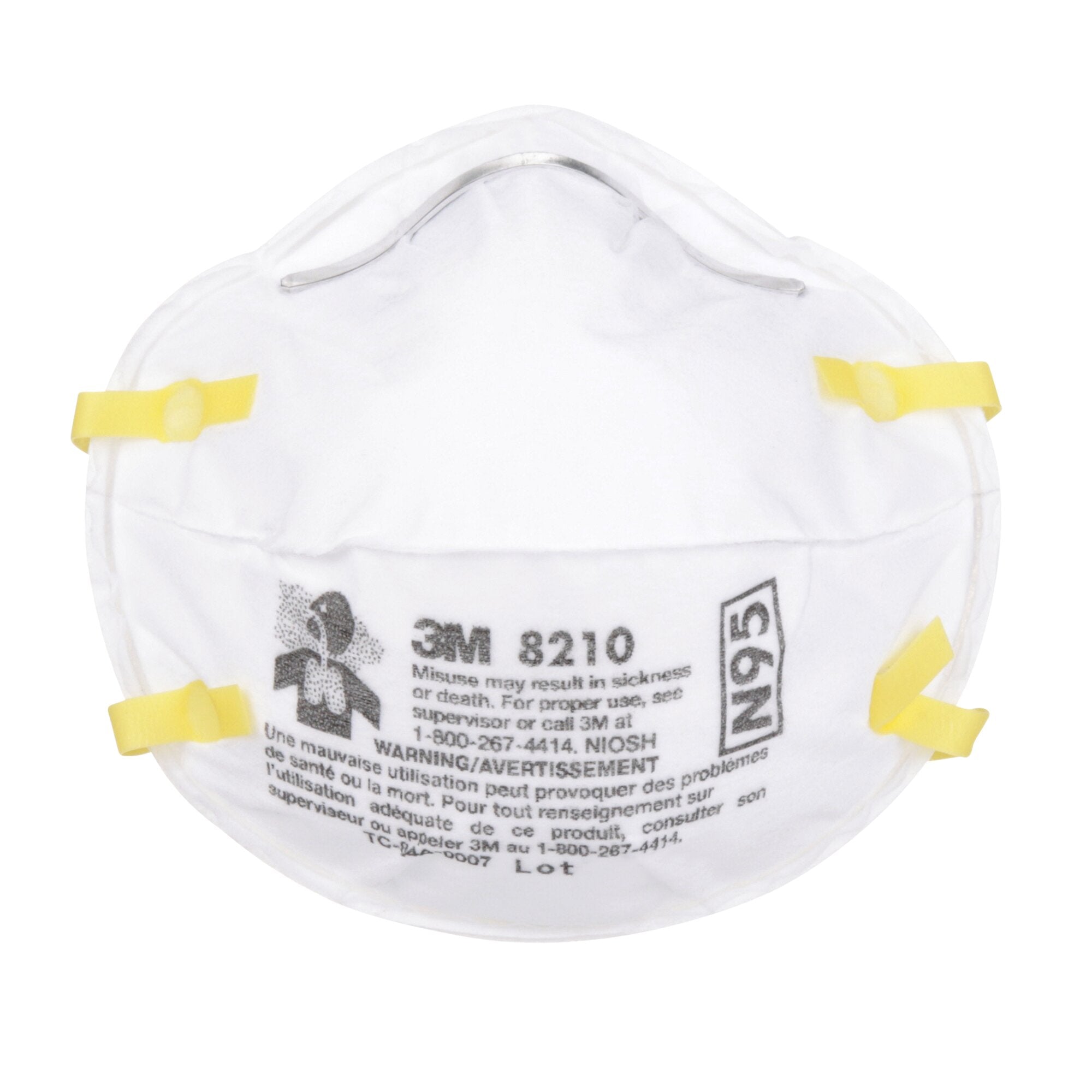
The 8210 is the classic 3M cup style N95. It uses advanced electrostatic filter media, cushioning nose foam, an adjustable nose clip, and a dual strap design.
It's designed for certain non-oil particles generated by operations such as grinding, sanding, sweeping, sawing, and bagging.
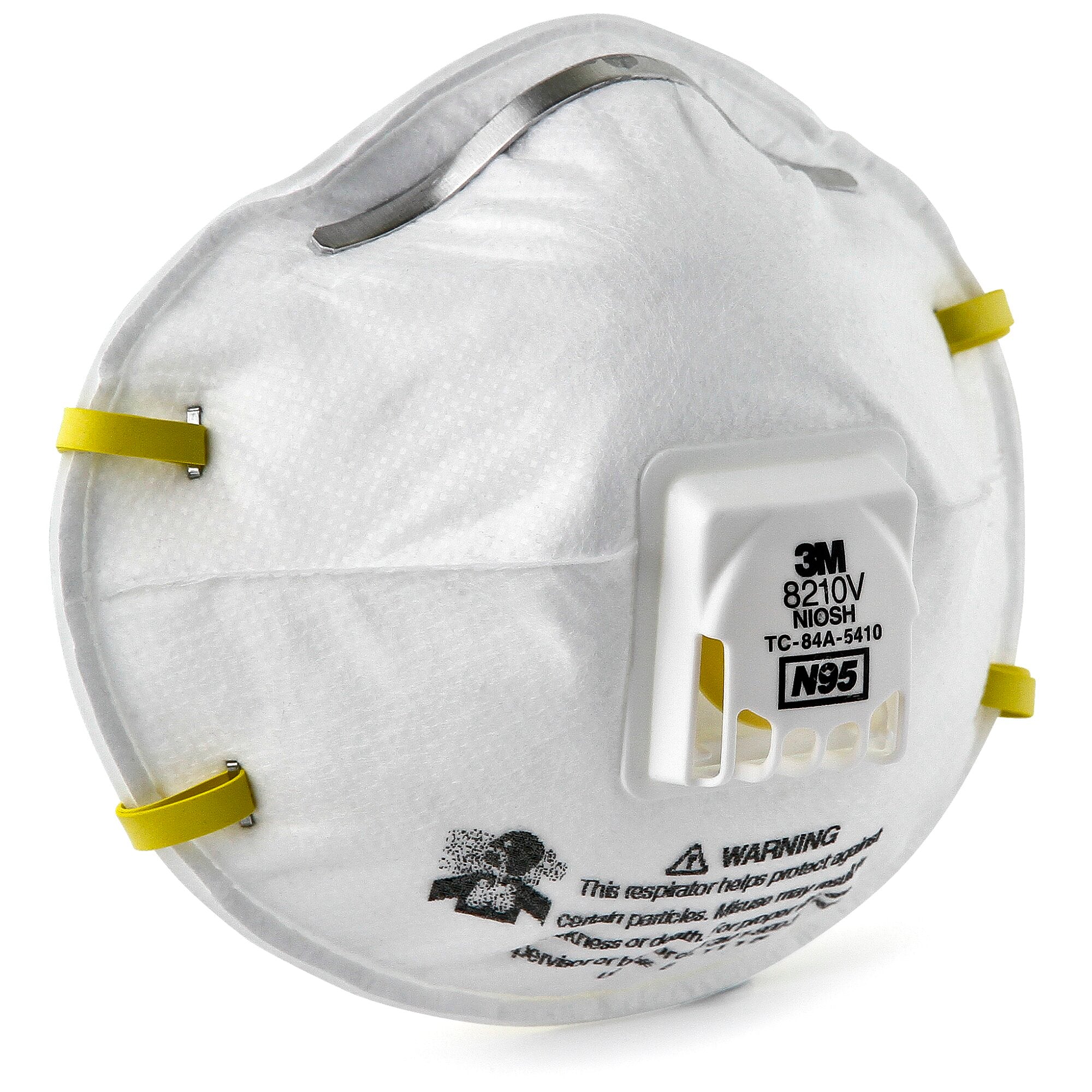
3M 8210V N95 Particulate Respirator
3M VFlex 9105 N95
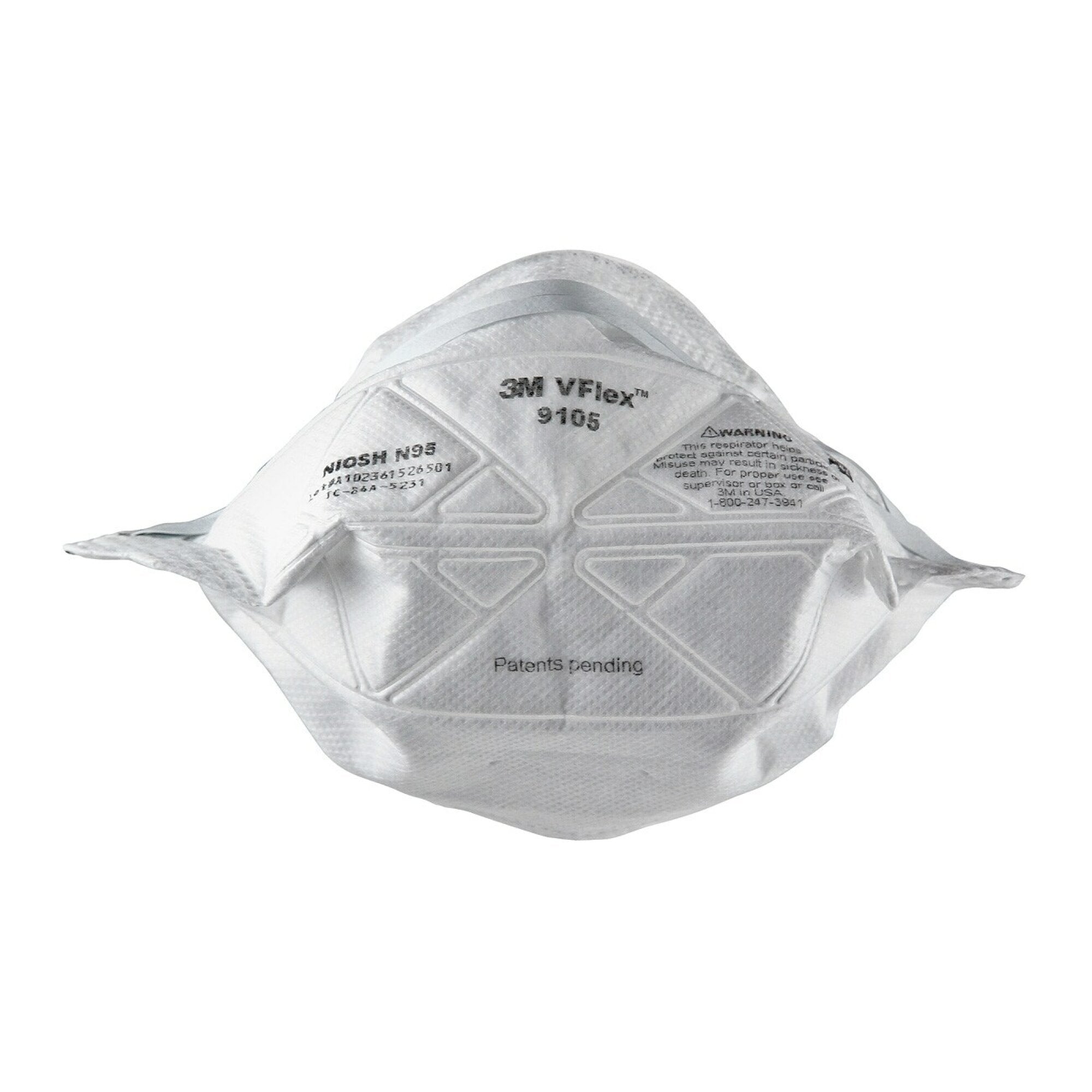
The VFlex 9105 uses V-shaped pleats that expand during breathing and flex with mouth movement while talking. Its flat fold construction also makes unused respirators convenient to store.
3M Aura 9211+ N95
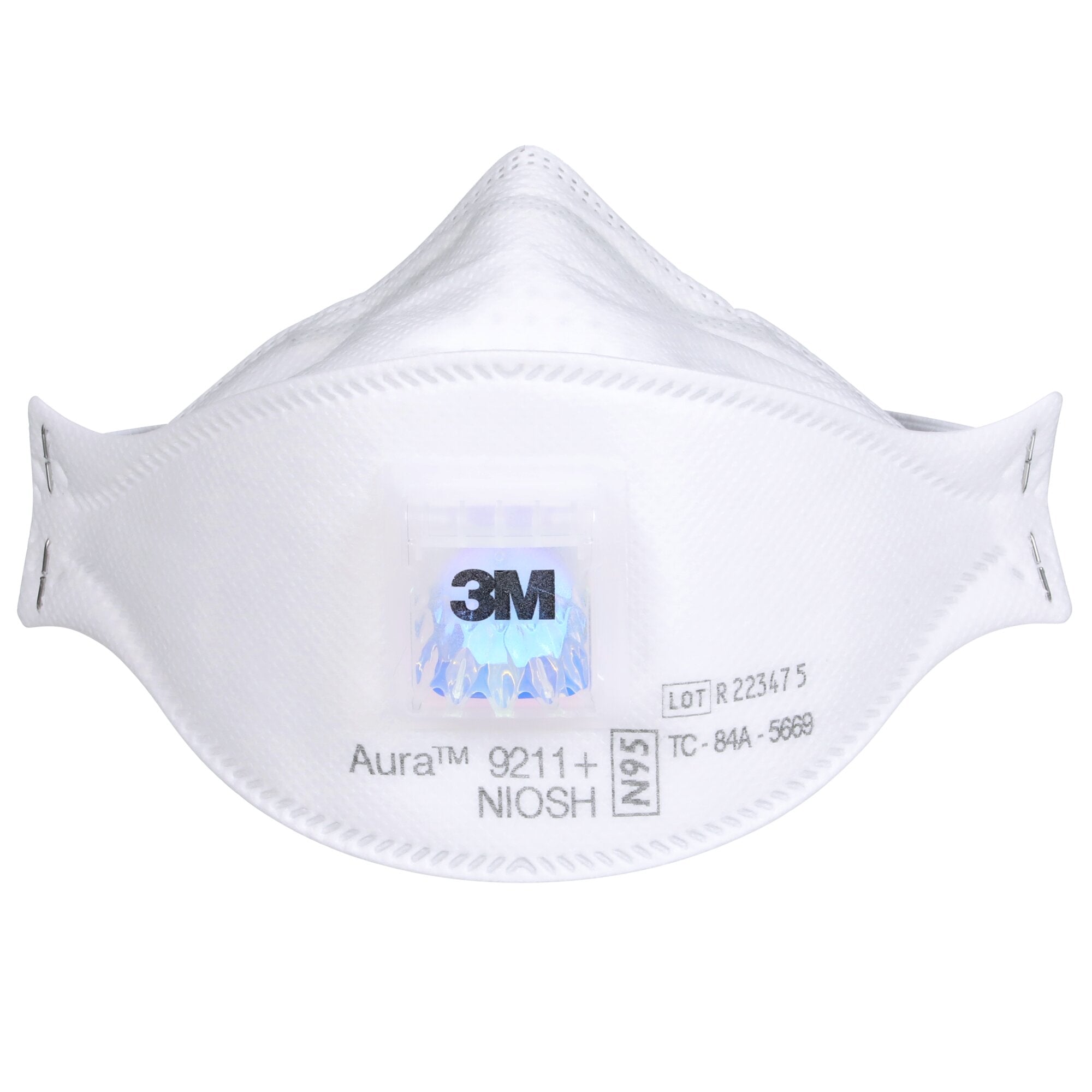
The Aura 9211+ combines 3M's three panel flat fold design with individual packaging and a Cool Flow Comfort Valve. Individual packaging can be particularly useful when respirators need to be distributed among service vehicles, tool kits, lockers, or jobsite PPE stations.
Trying to decide between the last two? We compare them in detail in 3M Aura vs. VFlex: Which N95 Respirator Should You Choose?
Frequently Asked Questions About N95 Lifespan
How many hours can you wear an N95?
There is no universal number of hours after which every N95 must be discarded. Replacement depends on the respirator's condition, contaminant, filter loading, workplace requirements, and manufacturer instructions.
Can I wear the same N95 for multiple days?
Reuse may be possible in some circumstances if permitted by the manufacturer and workplace respiratory protection program and if the respirator remains clean, undamaged, functional, and capable of achieving an appropriate seal. Reuse isn't appropriate for every exposure.
Should I replace my N95 every day?
Not necessarily. Some workplaces require single shift or more frequent replacement, while other applications may permit reuse. Follow the manufacturer's instructions and your employer's respiratory protection program.
How do I know when my N95 filter is full?
One practical warning sign is increased breathing resistance. Replace the respirator if it becomes difficult to breathe through, dirty, damaged, wet, contaminated, or unable to maintain a proper seal.
Can I wash an N95 and use it again?
Disposable N95 filtering facepiece respirators should not be washed. Washing or applying cleaning products can damage the filter media and other components.
Can I spray my N95 with disinfectant?
Don't apply cleaners or disinfectants unless the respirator manufacturer specifically provides an approved procedure for that exact product and use. Disposable N95s are not maintained in the same manner as reusable elastomeric respirators.
Can two people share an N95?
No. 3M advises that N95 filtering facepiece respirators should not be shared because of hygiene and fit considerations.
Do unopened N95 masks expire?
Yes. Many filtering facepiece respirators have a manufacturer established shelf life even when unopened. Check the use-by date and storage information on the packaging.
How long is the shelf life of a 3M 8210?
3M lists a five-year shelf life from the date of manufacture for the 8210 when stored according to the specified conditions. Always verify the use-by information on the actual packaging.
How long is the shelf life of a 3M Aura N95?
3M currently lists a five-year shelf life from manufacture for models including the Aura 9205+, 9210+, and 9211+, subject to specified storage conditions.
How long is the shelf life of a 3M VFlex 9105?
3M lists a five-year shelf life from manufacture for the VFlex 9105 and 9105S when properly stored.
Should I use an N95 after its expiration date?
3M recommends disposing of its filtering facepiece respirators after the stated use-by date has expired.
What happens if the straps become loose?
Replace the respirator if damaged or stretched straps prevent it from fitting and sealing correctly. Filtration efficiency cannot compensate for air leaking around the edges of a poorly fitting respirator.
Shop 3M N95 Respirators at EIO
So, how long does an N95 last?
The most useful answer isn't a number.
Use the respirator only as long as the manufacturer and your respiratory protection program permit, inspect it before every use, and replace it when it becomes dirty, damaged, wet, difficult to breathe through, contaminated, or unable to maintain a proper seal.
And don't forget about the other clock: shelf life. Even unused respirators should be stored correctly, rotated through inventory, and replaced when they reach their manufacturer established use-by date.
EIO carries a wide selection of genuine 3M respiratory protection products for construction, manufacturing, maintenance, woodworking, metalworking, and other professional applications.
Shop 3M products at EIO or continue learning with our respiratory protection guides:
Continue exploring the EIO Respiratory Protection Knowledge Center:
N95 vs. P95 vs. P100 Respirators: What’s the Difference?
The Complete Guide to 3M Disposable Respirators: Choosing the Right Protection for Your Job
3M Aura vs. VFlex: Which N95 Respirator Should You Choose?
How Long Does an N95 Respirator Last? When to Replace Your Respirator
Can You Reuse an N95 Respirator? Storage & Replacement Guide
Valved vs. Non-Valved N95 Respirators: Which Is Better?
Best Respirator for Woodworking: N95, P100, and 3M Options Explained
Best Respirator for Welding: 3M N95, P100, and Welding-Specific Options Explained
Best Respirator for Fiberglass Insulation: N95, N100 & P100
Respirator Safety Disclaimer
This article provides general educational information and is not a substitute for a workplace hazard assessment, exposure monitoring, manufacturer user instructions, professional safety advice, or an employer's respiratory protection program.
Respirator selection, use, reuse, storage, and replacement must be based on the specific contaminant, airborne concentration, work conditions, applicable regulations, manufacturer instructions, and workplace respiratory protection program.
Disposable particulate respirators do not provide oxygen and must not be used in oxygen-deficient atmospheres, immediately dangerous to life or health conditions, or for gases, vapors, or contaminants for which the respirator is not approved.
Where respirator use is required in a U.S. workplace, follow applicable OSHA respiratory protection requirements, including medical evaluation, training, fit testing, and proper use.