


Put a 3M 8210 and a 3M 8210V next to each other and the biggest difference is obvious.
One has a valve. One doesn't.
What isn't quite as obvious is what that valve actually does.
Does a valved N95 filter better? Does it make breathing easier? Is it better for hot environments? Does the valve change what you're protected against? And why would you choose a non-valved respirator when a valved version is available?
These questions become even more important when comparing respirators such as the 3M 8210 N95, 3M 8210V N95, 3M Aura 9211+ N95, and 3M VFlex 9105 N95.
Let's clear up the differences.
If you're still learning the basics of disposable respirators, start with our 3M Disposable Respirator Buying Guide. You can also read our guide to N95 vs. P95 vs. P100 respirators for a deeper explanation of filter classifications.
Valved vs. Non-Valved N95: The Quick Answer
| Feature | Valved N95 | Non-Valved N95 |
|---|---|---|
| Inhaled particle filtration | N95 when NIOSH approved as N95 | N95 when NIOSH approved as N95 |
| Exhalation valve | Yes | No |
| Heat and moisture release | Valve helps release warm, moist exhaled air | Exhaled air passes through filter media |
| Hot work environments | Often preferred for comfort | May feel warmer depending on model and conditions |
| Source control | Exhaled air can leave through valve; check workplace requirements | Exhaled air passes through respirator filter media |
| Examples | 3M 8210V, Aura 9211+ | 3M 8210, VFlex 9105 |
The simplest way to think about it is this:
An exhalation valve is primarily a comfort feature.
When you're breathing in, the respirator's filter media performs the filtration job. When you're breathing out, the valve can open and allow warm, humid exhaled air to escape more directly.
That difference can become noticeable during physical work, particularly in hot environments or during long periods of respirator wear.
What Does an N95 Exhalation Valve Actually Do?
 Every time you exhale into a respirator, you're adding warm, humid air inside the facepiece.
If you're sitting still in an air-conditioned room, that may not bother you much.
If you're grinding, sanding, welding, carrying materials, climbing ladders, or working outside in August, it's another story.
An exhalation valve is designed to help warm, moist exhaled air leave the respirator.
3M calls the valve used on many of its disposable respirators the 3M Cool Flow™ Valve.
For example, the 3M 8210V N95 combines the familiar cup-style 8210 design with a Cool Flow Valve. The result is an N95 intended to provide the required particulate filtration while improving comfort in hot, dusty environments and during longer periods of wear.
Does a Valved N95 Filter Better Than a Non-Valved N95?
No.
A valve does not turn an N95 into an N99, N100, P95, or P100.
If both respirators are NIOSH approved N95 filtering facepiece respirators, both are designed to provide at least 95 percent filtration efficiency against the test aerosol for the N95 classification.
The valve isn't there to increase the filtration rating.
This is important because buyers sometimes assume that the more expensive looking respirator with a valve must provide greater protection.
Not necessarily.
Consider the 3M 8210 and 3M 8210V.
Both are N95 respirators.
The major reason for choosing the 8210V is the added exhalation valve and the comfort advantage that can provide, not a higher NIOSH filter classification.
If you actually need a different filtration class, that's a different decision entirely. Our N95 vs. P95 vs. P100 guide explains those differences in detail.
Are Valved N95 Respirators More Comfortable?
 For many workers, particularly in hot conditions, they can be.
Think about what's happening inside a respirator during physical work.
Your breathing rate increases. You're producing more heat. Every exhaled breath contains moisture.
A valve gives that warm, humid exhaled air another path out of the respirator.
That can be useful for:
- Construction workers
- Woodworkers
- Welders
- Industrial maintenance technicians
- Warehouse and manufacturing employees
- Landscaping crews
- Workers in hot mechanical spaces
- Anyone performing physically demanding dusty work
That doesn't mean every person will automatically prefer a valve. Respirator comfort also depends on face shape, filter media, straps, nose foam, interior space, breathing resistance, temperature, humidity, and fit.
A VFlex, for example, can feel very different from a cup-style respirator even though neither requires an exhalation valve to achieve its N95 rating.
3M 8210 vs. 8210V: What's the Difference?
This is probably the cleanest comparison in the 3M lineup.
3M 8210 N95
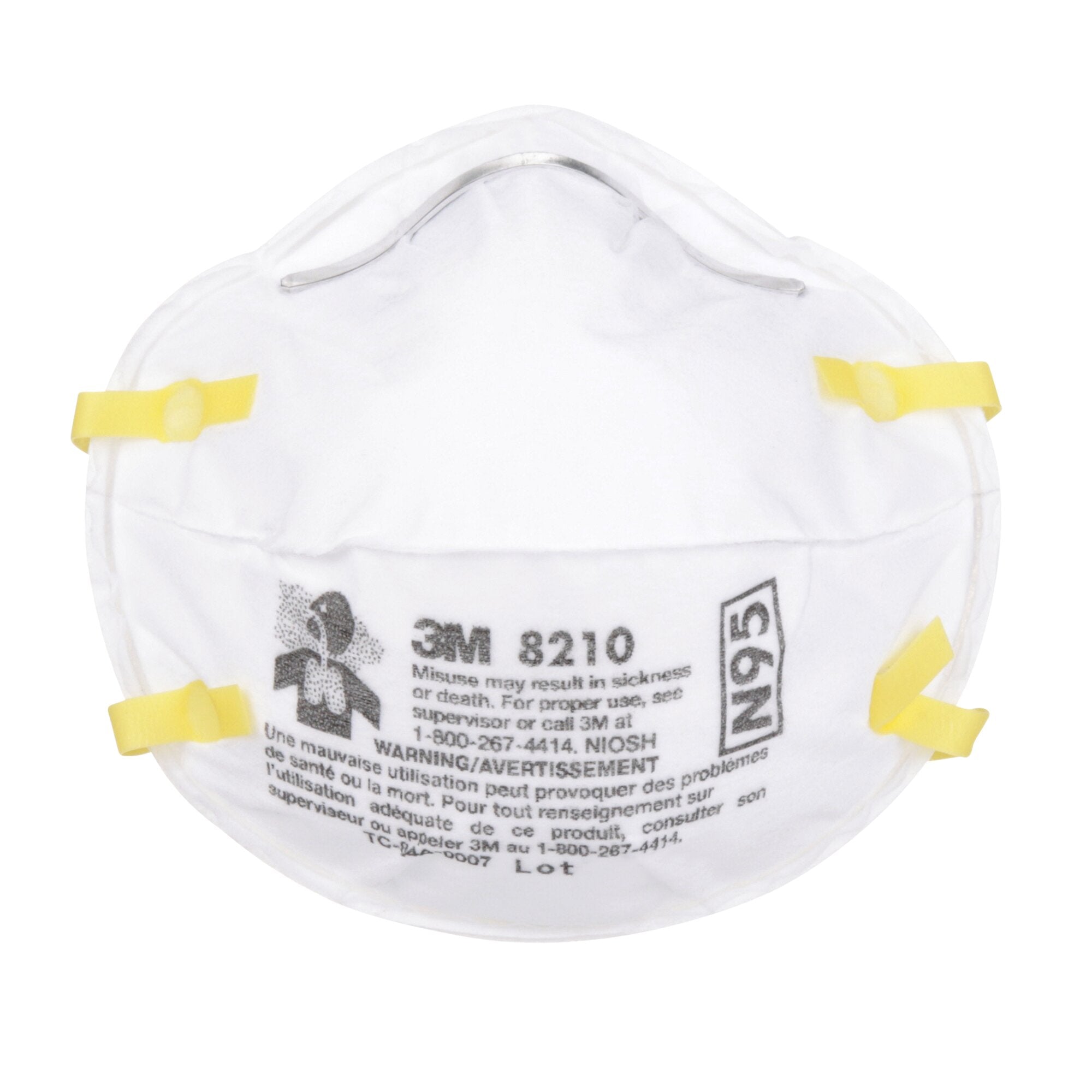
The 3M 8210 is one of the best known industrial N95 respirators ever made.
It uses a molded cup design with:
- NIOSH approved N95 filtration
- 3M advanced electrostatic filter media
- Cushioning nose foam
- Adjustable nose clip
- Two strap design
- Compatibility with various protective eyewear and hearing protection
It does not have an exhalation valve.
The 8210 is a straightforward option for grinding, sanding, sweeping, sawing, bagging, and other applications involving certain non-oil-based particles when an N95 is appropriate for the hazard.
3M 8210V N95
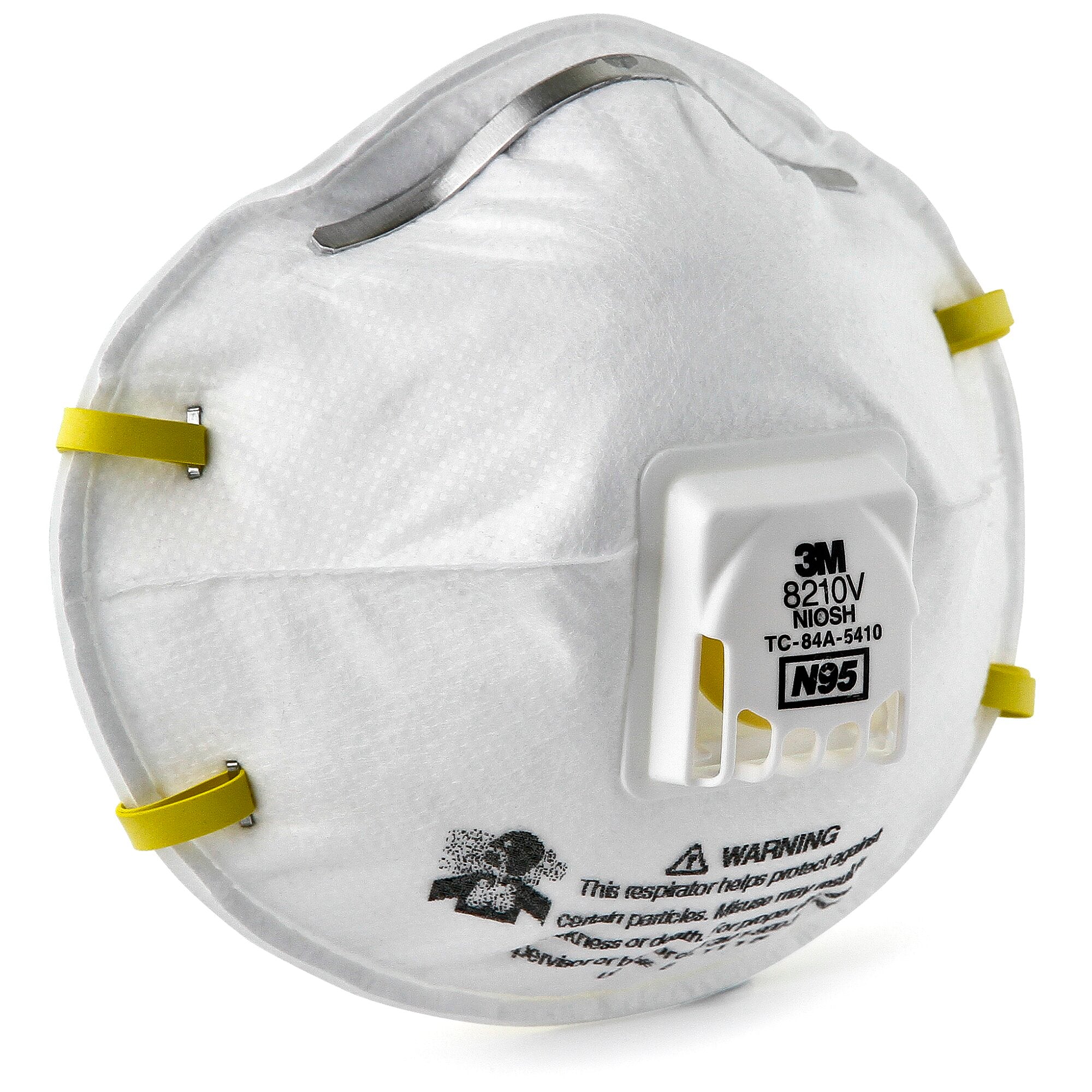
The 8210V follows the same general cup style concept but adds the 3M Cool Flow Valve.
3M specifically positions the 8210V for comfortable respiratory protection in hot and dusty work settings or during longer periods of wear.
The valve helps release warm and moist exhaled breath from inside the respirator.
So if your choice is specifically between the 8210 and 8210V, the question is less about filtration and more about comfort requirements and whether an exhalation valve is appropriate for your workplace.
8210 vs. 8210V at a Glance
| Feature | 3M 8210 | 3M 8210V |
|---|---|---|
| Filter rating | N95 | N95 |
| Style | Cup | Cup |
| Exhalation valve | No | Yes |
| Cool Flow Valve | No | Yes |
| Nose foam | Yes | Yes |
| Best reason to choose | Simple non-valved industrial N95 | Added comfort for hot or demanding work |
What About the 3M Aura 9211+?
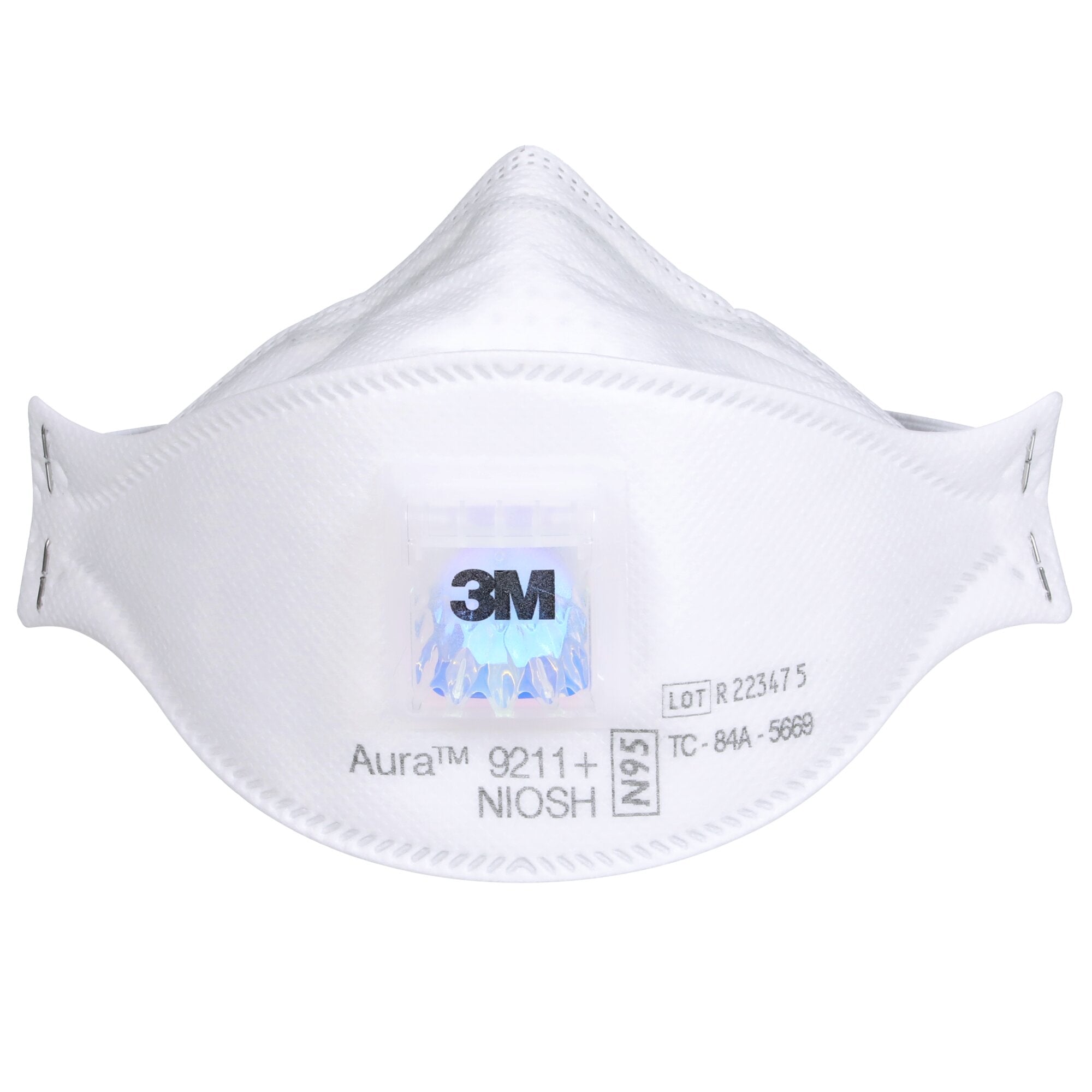
Instead of a molded cup, the Aura uses 3M's three panel flat fold design.
Features include:
- NIOSH approved N95 filtration
- 3M Cool Flow Comfort Valve
- Three panel construction
- Soft inner materials
- Adjustable nose clip
- Braided headbands
- Low profile shape around the nose and eyes
- Embossed upper panel designed to help reduce eyewear fogging
- Individual packaging
- Flat fold storage
This makes the Aura 9211+ particularly interesting for workers who want a valved respirator but don't necessarily want a traditional molded cup.
The individual packaging is also convenient for service vehicles, tool bags, maintenance departments, lockers, and jobsite PPE stations.
If you're deciding between an Aura and VFlex rather than simply deciding whether you want a valve, read our 3M Aura vs. VFlex comparison.
What About the Non-Valved 3M VFlex 9105?
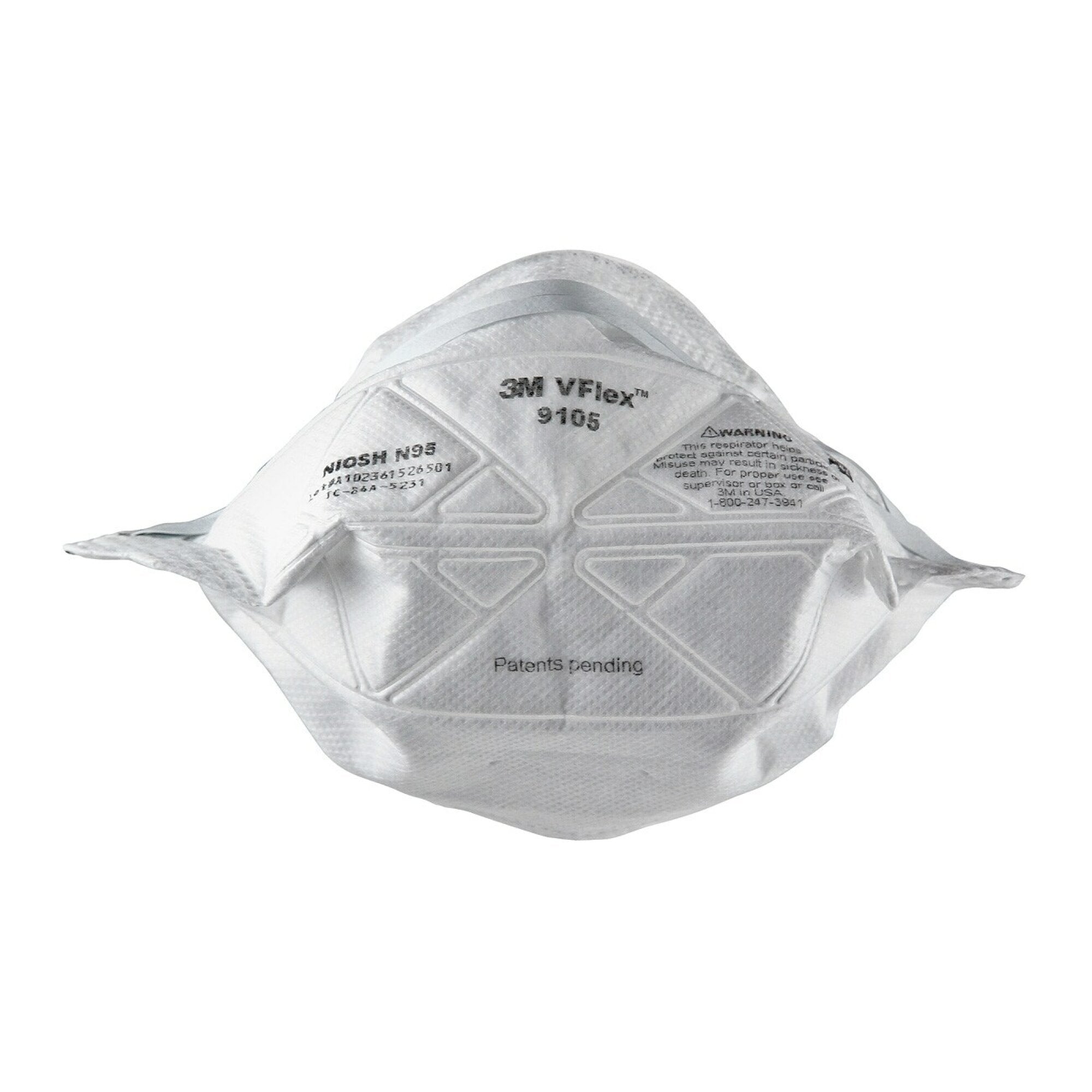
The 3M VFlex 9105 N95 demonstrates why the valve isn't the only factor affecting comfort.
The 9105 doesn't use an exhalation valve.
Instead, it uses V-shaped pleats that expand during breathing and flex as the wearer talks.
The design provides a spacious interior and gives the filter media room to move with mouth movement.
For some workers, that roomy shape and flexible design may be preferable to a traditional cup style respirator.
In other words, don't shop for a respirator based on the valve alone.
Overall fit and design matter just as much.
Valved N95s and Eyewear Fogging
Anyone who wears safety glasses with a respirator knows how annoying fogging can become.
An exhalation valve can help direct some warm exhaled air away from the interior of the respirator, but the valve alone does not guarantee fog free eyewear.
Fit around the nose is extremely important.
If warm air is leaking upward around the nose rather than passing through the intended airflow path, your safety glasses can still fog.
This is one reason adjustable nose clips, nose foam, and correct donning matter.
The Aura 9211+ goes a step further with an embossed upper panel specifically designed to help reduce eyewear fogging while providing additional room for protective eyewear.
Does an Exhalation Valve Make an N95 Easier to Breathe Through?
We need to separate inhaling from exhaling.
During inhalation, you're still drawing air through the respirator's filter media.
The valve primarily affects exhalation by allowing exhaled air to leave through the valve.
So when workers describe a valved respirator as "easier to breathe in," what they may actually be noticing is lower heat and moisture buildup and easier exhalation.
Those comfort improvements can still be significant during physically demanding work.
Are Valved Respirators Better for Hot Weather?
 This is one of the applications where a valve can make the most sense.
Imagine wearing respiratory protection while:
- Working on a roof
- Grinding concrete outdoors
- Sanding in an unconditioned building
- Working inside a mechanical room
- Performing industrial maintenance near hot equipment
- Welding in protective clothing
You're already generating heat from physical activity and the surrounding environment.
Anything that helps reduce warm, humid air accumulating inside the respirator can improve wearer comfort.
That is exactly the type of environment for which 3M markets valved models such as the 8210V.
When Should You Choose a Non-Valved N95?
A non-valved respirator makes sense when:
- Your workplace does not permit exhalation valves.
- Source control considerations make a non-valved design preferable.
- You don't need the added exhalation comfort.
- You prefer a simpler respirator design.
- A non-valved model provides the best fit for your face.
- Your employer's respiratory protection program specifies a particular non-valved model.
Models such as the 3M 8210 and 3M VFlex 9105 provide two very different non-valved approaches: a traditional molded cup and an expandable flat fold design.
When Should You Choose a Valved N95?
A valved N95 may be particularly attractive when:
- You work in hot environments.
- Your job is physically demanding.
- You wear respiratory protection for extended periods.
- Heat and humidity inside the respirator are major comfort concerns.
- The workplace permits exhalation valves.
- The valved model passes the required fit test and is appropriate for the hazard.
The 3M 8210V is a straightforward choice for workers who like traditional cup style respirators.
The 3M Aura 9211+ provides a more feature rich alternative with flat fold storage, individual packaging, a three panel design, braided straps, and eyewear oriented features.
Valved vs. Non-Valved N95s by Application
Construction
Both types can be useful for construction applications involving certain non-oil particles when an N95 provides sufficient protection.
A valved respirator may provide a comfort advantage during outdoor work, especially in warm weather.
Concrete and Masonry
Concrete cutting, drilling, grinding, and demolition can generate respirable crystalline silica.
A valve doesn't change whether the respirator provides an adequate protection factor for a particular silica exposure.
Engineering controls, exposure assessment, applicable OSHA requirements, and correct respirator selection still come first.
For more information, read our guide to respirators for silica dust.
Woodworking
For sanding, sawing, and other dusty woodworking operations, either style may be appropriate depending on the hazard assessment.
A valved model may be attractive in hot shops, while a non-valved VFlex may appeal to workers who prioritize interior space and easy talking.
Industrial Maintenance
Maintenance technicians may move between dramatically different working conditions during the same shift.
A valved respirator can be useful in hot mechanical areas, but the actual contaminant must always be considered. An N95 protects against certain particles, it does not automatically protect against hazardous gases or vapors.
Welding
3M also uses exhalation valves on specialized disposable welding respirators.
For example, the 3M 8515 N95 Welding Respirator features a Cool Flow Valve along with flame resistant construction and is designed for certain welding, soldering, and metal fume applications.
That doesn't mean a general purpose valved N95 should automatically be substituted for a respirator selected specifically for a welding exposure. Always select respiratory protection for the actual hazard.
Valves Don't Change the Basic N95 Limitations
This point is important enough to say plainly.
An exhalation valve does not turn a particulate respirator into a gas and vapor respirator.
A general purpose N95 should not be selected for hazardous solvent vapors, paint vapors, acid gases, oxygen deficient atmospheres, or other contaminants outside its approval and user instructions.
If the hazard requires cartridges, different filter classifications, a reusable respirator, supplied air, or another type of respiratory protection, adding a valve to an N95 doesn't change that.
So Which Is Better: Valved or Non-Valved?
Neither is universally better.
Choose a valved N95 when the model is appropriate for the hazard and workplace and you want additional help releasing warm, humid exhaled air, particularly during hot or physically demanding work.
Choose a non-valved N95 when workplace requirements or source control considerations favor it, or when a non-valved model simply provides the better fit and overall design for the wearer.
And remember: the valve should never be the first thing you consider.
The correct order is closer to this:
- Identify the airborne hazard.
- Determine the required level and type of respiratory protection.
- Select approved respirators appropriate for that hazard.
- Determine which models and sizes fit the individual wearer.
- Then compare comfort features such as valves, flat fold designs, nose foam, straps, and interior space.
A comfortable respirator is valuable because workers have to actually wear it.
But comfort doesn't replace correct respirator selection.
Frequently Asked Questions About Valved N95 Respirators
What is the valve on an N95 for?
The exhalation valve is designed to help warm, moist exhaled air escape from inside the respirator, which can improve comfort during hot or physically demanding work.
Does an N95 with a valve protect better?
Not simply because it has a valve. A NIOSH approved N95 remains an N95. The valve primarily changes exhalation comfort rather than increasing the N95 filter classification.
Is the 3M 8210V better than the 8210?
It depends on your needs. Both are N95 filtering facepiece respirators. The 8210V adds a 3M Cool Flow Valve, making it particularly attractive for hot, dusty work or longer periods of wear. The 8210 is a straightforward non-valved alternative.
Is the 3M Aura 9211+ valved?
Yes. The 3M Aura 9211+ N95 incorporates a 3M Cool Flow Comfort Valve along with its three-panel flat-fold design.
Is the 3M VFlex 9105 valved?
No. The VFlex 9105 is a non-valved N95. It uses expandable V-shaped pleats designed to help with breathing comfort and mouth movement.
Do valved N95s help prevent glasses from fogging?
A valve can help release warm exhaled air, but it cannot guarantee fog free glasses. Proper fit around the nose is critical. The Aura 9211+ also incorporates an embossed upper panel designed to help reduce eyewear fogging.
Are valved N95s better for summer?
They can be more comfortable in hot conditions because the valve helps release warm, moist exhaled air. Respirator selection must still be based on the hazard, workplace requirements, and fit.
Can I use a valved N95 for silica dust?
A valve by itself does not determine whether an N95 is sufficient for a silica exposure. The required respirator depends on the task, airborne concentration, engineering controls, applicable requirements, and assigned protection factor. See our silica dust respirator guide.
Does a valved N95 last longer?
Not necessarily. Replacement depends on factors such as damage, contamination, filter loading, breathing resistance, manufacturer instructions, and workplace requirements. Read How Long Does an N95 Respirator Last? for our complete guide.
Can a valved N95 protect against paint fumes?
No, not simply because it has a valve. N95 refers to particulate filtration. Hazardous gases and vapors may require appropriately selected cartridges, reusable respirators, or other respiratory protection.
Do valved N95 respirators require fit testing?
When a tight fitting respirator is required for occupational use under applicable OSHA requirements, fit testing is required. The presence of an exhalation valve does not eliminate fit testing requirements.
Shop Valved and Non-Valved 3M N95 Respirators at EIO
The difference between valved and non-valved N95 respirators is easier to understand once you stop thinking of the valve as an upgraded filter.
It isn't.
The valve is primarily about managing exhaled heat and moisture.
For a classic non-valved industrial N95, consider the 3M 8210 N95.
If you like the traditional cup design but want a Cool Flow Valve for hot and dusty work, look at the 3M 8210V N95.
For a non-valved flat fold respirator with a roomy, pleated design, consider the 3M VFlex 9105 N95.
And for a premium valved flat fold option, the 3M Aura 9211+ N95 combines the Cool Flow Comfort Valve with 3M's three panel Aura design.
Shop 3M respiratory protection products at EIO or continue with the rest of our respiratory protection knowledge center:
Continue exploring the EIO Respiratory Protection Knowledge Center:
N95 vs. P95 vs. P100 Respirators: What’s the Difference?
The Complete Guide to 3M Disposable Respirators: Choosing the Right Protection for Your Job
3M Aura vs. VFlex: Which N95 Respirator Should You Choose?
How Long Does an N95 Respirator Last? When to Replace Your Respirator
Can You Reuse an N95 Respirator? Storage & Replacement Guide
Valved vs. Non-Valved N95 Respirators: Which Is Better?
Best Respirator for Woodworking: N95, P100, and 3M Options Explained
Best Respirator for Welding: 3M N95, P100, and Welding-Specific Options Explained
Best Respirator for Fiberglass Insulation: N95, N100 & P100
Respirator Safety Disclaimer
This article provides general educational information and is not a substitute for a workplace hazard assessment, exposure monitoring, manufacturer user instructions, professional safety advice, or an employer's respiratory protection program.
Respirator selection must be based on the specific airborne contaminant, concentration, work conditions, required protection factor, applicable regulations, and manufacturer instructions.
Disposable particulate respirators do not provide oxygen and must not be used in oxygen-deficient atmospheres, immediately dangerous to life or health conditions, or for hazardous gases or vapors unless specifically approved for the identified hazard.
Where respirator use is required in a U.S. workplace, follow applicable OSHA respiratory protection requirements, including medical evaluation, training, fit testing, and proper use.