


If you've been using disposable N95 respirators, there comes a point when it makes sense to look at the other side of respiratory protection: reusable respirators.
Instead of replacing the entire respirator when the filter reaches the end of its useful life, a reusable respirator separates the facepiece from the filtration system.
You keep the facepiece and replace the filters or cartridges as needed.
That opens up considerably more possibilities.
The same compatible 3M reusable facepiece can potentially be configured for particulate filtration, certain gases and vapors, or a combination of hazards simply by installing the appropriate NIOSH-approved filters or cartridges for the application.
But it also makes respirator selection more complicated.
What is the difference between a filter and a cartridge?
What do the pink 3M P100 filters do?
What is an organic vapor cartridge?
Can you attach an N95 filter to a reusable respirator?
What's the difference between the 3M 6000, 6500QL, and 7500 Series?
And how do you know which combination you actually need?
This guide explains the 3M reusable respirator system from the beginning.
If you're still deciding whether a disposable respirator is enough for your work, start with our Complete Guide to 3M Disposable Respirators.
If you're using respirators occupationally, also read our OSHA Respiratory Protection Requirements Guide.
What Is a Reusable Respirator?
A reusable respirator uses a durable facepiece designed to be cleaned, maintained, and worn repeatedly.
Replaceable filters or cartridges attach to the facepiece.
When the filter or cartridge reaches the end of its service life, you replace that component rather than throwing away the entire respirator.
A typical reusable air purifying respirator consists of:
- A facepiece
- Head straps or harness
- Inhalation valves
- Exhalation valve
- Replaceable filters, cartridges, or combination cartridges
Depending on the model and configuration, additional retainers, adapters, prefilters, or accessories may be used.
The filter or cartridge determines which contaminants the respirator is approved to help protect against.
Disposable N95 vs. Reusable Respirator![]()

|
|
Disposable N95 | Reusable Half-Mask Respirator |
|---|---|---|
| Facepiece | Filtering material is the facepiece | Durable reusable facepiece |
| Filters | Built into respirator | Replaceable |
| Gas/vapor cartridges | Generally no | Available for compatible systems and specific hazards |
| Cleaning | Not designed to be washed | Facepiece designed for cleaning and maintenance |
| Initial cost | Lower | Higher |
| Frequent use | Convenient | Can be economical for repeated use |
| Configuration choices | Limited | Extensive |
If you're sanding a few boards on Saturday, a disposable 3M 8210 N95 may be convenient.
If you're sanding, grinding, painting, welding, or working around respiratory hazards every day, the economics and versatility of a reusable system become much more interesting.
Understanding the 3M Reusable Respirator System
Many traditional 3M reusable facepieces share the 3M bayonet connection system.
Depending on the approved configuration, the same facepiece can accept different particulate filters, gas and vapor cartridges, combination cartridges, prefilters, retainers, and adapters.
Do not assume every 3M filter fits every 3M respirator. 3M also manufactures other connection systems, including Secure Click. Always verify compatibility and the applicable NIOSH approval.
3M 6000 vs. 6500QL vs. 7500 Series Reusable Respirators
| Feature | 3M 6000 Series | 3M 6500QL Series | 3M 7500 Series |
|---|---|---|---|
| General Position | Simple, lightweight workhorse | Rugged jobsite-oriented design | Comfort focused premium design |
| Face seal Material | Thermoplastic elastomer | Silicone | Silicone |
| Connection | 3M bayonet | 3M bayonet | 3M bayonet |
| Quick Latch | No | Yes on QL models | No |
| Sizes | Small, Medium, Large | Small, Medium, Large | Small, Medium, Large |
3M 6000 Series

The 6000 Series is a simple, lightweight, economical reusable half-mask platform available in three sizes:
EIO also carries assemblies built around this platform, including the 3M 6291 Medium Half Facepiece Assembly with P100 filters.
3M 6500QL Series
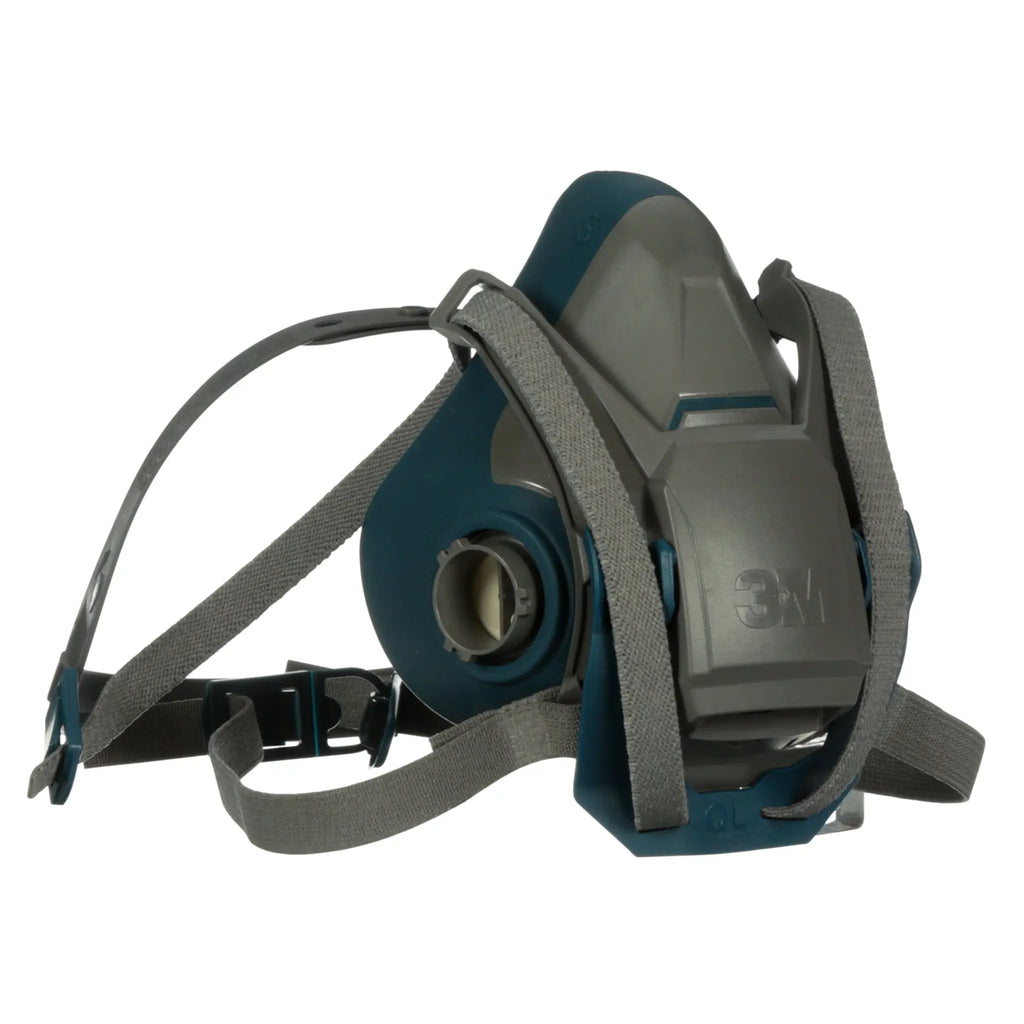
The 6500QL Series moves toward a more rugged silicone design and incorporates 3M's Quick Latch mechanism on QL models.
The family includes:
The Quick Latch allows the user to lower and raise the facepiece without completely removing the head harness when workplace procedures permit it.
For construction, industrial maintenance, manufacturing, grinding, and similar demanding environments, the 6500QL family can be particularly attractive.
3M 7500 Series
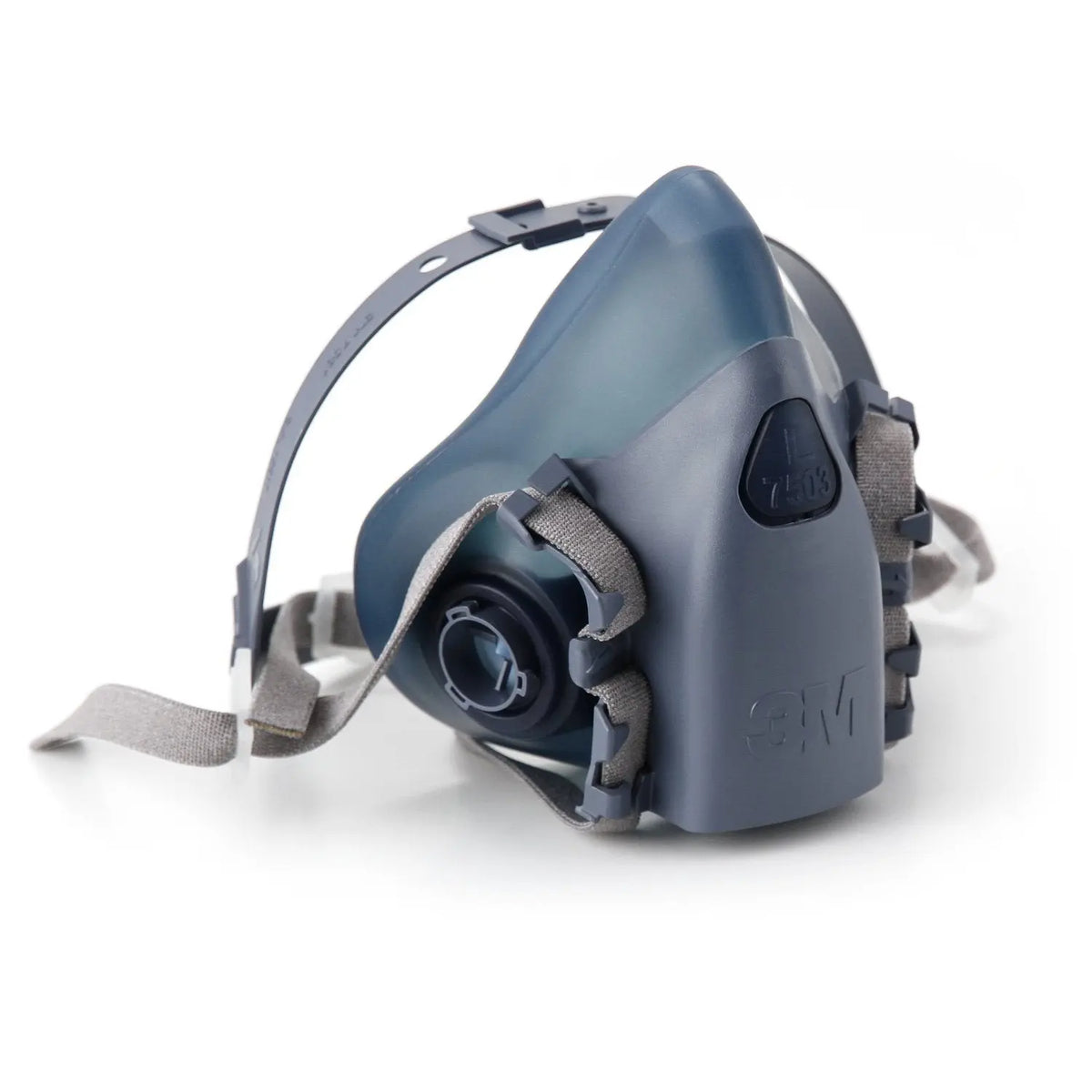
The 7500 Series is another silicone platform, with an emphasis on comfort for frequent and extended wear.
If you're wearing a respirator occasionally, the simplicity of the 6000 Series may make sense.
If you're working in demanding environments and value the drop-down convenience of Quick Latch, consider the 6500QL.
If extended wear comfort is one of your highest priorities, the 7500 Series deserves serious consideration.
Respirator Filters vs. Cartridges: What's the Difference?
 This is probably the single most important concept to understand about reusable respirators. A particulate filter and a gas/vapor cartridge are not interchangeable.
Particulate Filters
Particulate filters are designed to capture airborne particles.
Examples can include certain:
- Dusts
- Fibers
- Mists
- Fumes
- Other airborne particulates
Gas and Vapor Cartridges
Gas and vapor cartridges contain sorbent materials designed for specified gases or vapors.
Examples include cartridges intended for certain:
- Organic vapors
- Acid gases
- Ammonia and methylamine
- Formaldehyde
- Other specified gases and vapors
Combination Protection
Some configurations provide both particulate and gas/vapor protection.
That can be accomplished through a combination cartridge/filter or by installing an appropriate particulate prefilter over a compatible gas/vapor cartridge.
N95, P95 and P100 Filters for Reusable Respirators
| Filter Class | Minimum Efficiency | Oil Resistance | 3M Example |
|---|---|---|---|
| N95 | 95% | Not resistant to oil | 3M 5N11 |
| P95 | 95% | Strongly resistant to oil | 3M 5P71 |
| P100 | 99.97% | Strongly resistant to oil | 2091, 2097, 7093 |
The basic N95, P95, and P100 classifications work the same way whether the filter is built into a disposable respirator or attached to a reusable facepiece.
3M 2091 vs. 2097 P100 Filters
3M 2091 P100

The 2091 is one of the most recognizable filters in the 3M reusable respirator system.
It provides P100 particulate filtration, meaning at least 99.97 percent filtration efficiency against the applicable NIOSH test aerosol and strong resistance to oil.
The 2091 is commonly considered for applications involving:
- Grinding
- Sanding
- Woodworking
- Metalworking
- Fiberglass
- Certain welding fumes
- Other particulate hazards
3M 2097 P100

The 2097 also provides P100 particulate filtration but adds nuisance level organic vapor relief.
That makes the 2097 useful in certain environments where unpleasant organic odors are present at nuisance levels.
Nuisance level organic vapor relief is not a substitute for a cartridge approved for hazardous organic vapor concentrations.
3M 7093 P100

The 3M 7093 P100 provides the same P100 filtration class in a hard case filter design.
The enclosed housing can make it attractive for demanding industrial environments where the filter media benefits from additional physical protection.
3M 5N11 and 5P71 Particulate Filters
3M 5N11 N95

The 5N11 is a replaceable N95 particulate filter.
Unlike the 2091, it is a flat prefilter-style component commonly used over compatible gas/vapor cartridges.
3M 5P71 P95

The 5P71 follows the same general physical format but provides P95 particulate filtration.
Because P-series filters are strongly resistant to oil, the 5P71 can be used in certain environments where oil aerosols are present, subject to the complete respirator configuration and applicable use limitations.
3M 501 Filter Retainer

The 501 retainer holds compatible 5N11 or 5P71 particulate filters over compatible gas/vapor cartridges.
That gives us the familiar layered configuration:
Facepiece → Gas/Vapor Cartridge → Particulate Filter → 501 Retainer.
3M 603 Filter Adapter

The 3M 603 Filter Adapter provides another option.
It allows compatible 5N11 or 5P71 filters to be used with a 501 retainer directly on compatible bayonet style facepieces in approved particulate only configurations.
Understanding 3M Gas and Vapor Cartridges
Once you move from dust into gases and vapors, respirator selection changes considerably.
A P100 filter may provide excellent particulate filtration and still provide no appropriate protection against a hazardous vapor.
That is because particles and vapors behave differently.
Particulate filters capture particles using engineered filter media.
Gas and vapor cartridges use sorbent materials designed for specified chemical contaminants.
3M 6001 Organic Vapor Cartridge

The 6001 is one of the most widely used cartridges in the 3M bayonet system.
It is designed for protection against certain organic vapors when used within an approved respirator configuration and applicable use limitations.
Potential applications can include certain:
- Painting operations
- Varnishing
- Staining
- Solvent work
- Sealants
- Solvent based cleaning operations
- Certain pesticide applications
But the phrase organic vapor does not mean “every chemical vapor.”
The exact contaminant, concentration, exposure limit, cartridge approval, service-life calculation, and workplace conditions still need to be evaluated.
Combination Cartridges and Filters
3M also manufactures cartridges that combine gas/vapor protection with P100 particulate filtration in one assembly.
3M 60923 Organic Vapor/Acid Gas/P100

The 60923 combines protection for specified organic vapors and acid gases with P100 particulate filtration.
3M 60926 Multi-Gas/Vapor/P100

The 60926 covers a broader selection of specified gases and vapors while also incorporating P100 particulate filtration.
3M 60928 Organic Vapor/Acid Gas/P100

The 60928 is another combination cartridge/filter option within the 3M system.
These products illustrate one of the biggest advantages of reusable respiratory protection: particulate and gas/vapor protection can be combined into a single compatible assembly when the application and approval support it.
Why Paint Respirators Often Use Both a Cartridge and Filter
 Painting is an excellent example of why reusable respirator systems can become more complicated than a disposable N95.
A painting application may create:
- Organic vapors from solvents
- Airborne paint droplets or mist
- Other coating specific contaminants
The 3M 6211P1 Performance Paint Project Respirator illustrates the concept clearly.
It includes:
- A reusable half facepiece
- 6001 organic vapor cartridges
- 5P71 P95 filters
- 501 filter retainers
The 6001 addresses specified organic vapor hazards, while the 5P71 adds particulate filtration.
EIO also carries additional paint-oriented configurations, including the 3M 6502QL Paint Project Respirator with Quick Latch and the 3M 69P71 Full Face Paint Project Respirator.
How Do You Choose the Correct 3M Filter or Cartridge?
Start with the hazard, not the respirator.
- Identify the contaminant.
- Determine the airborne concentration.
- Verify oxygen is adequate.
- Determine whether oil aerosols are present.
- Decide whether you need particulate, gas/vapor, or combination protection.
- Determine the required protection factor.
- Verify the complete configuration is NIOSH approved.
Common Applications
Woodworking
Reusable respirators with appropriate particulate filters can be an alternative to disposable N95s for frequent woodworking.
See our Best Respirator for Woodworking guide.
Fiberglass Insulation
Professionals who work around fiberglass frequently may prefer a reusable facepiece with replaceable particulate filters.
See our Best Respirator for Fiberglass Insulation guide.
Silica Dust
A reusable respirator equipped with appropriate particulate filtration may be part of a compliant silica-control program in certain circumstances.
See our Best Respirator for Silica Dust guide.
Welding
Reusable respirators with properly selected filters can be useful for certain welding-fume exposures.
See our Best Respirator for Welding guide.
Painting
Painting is where reusable respirators become particularly useful, and where filter selection needs to be handled carefully.
A particulate filter alone does not automatically protect against hazardous organic vapors.
Depending on the paint or coating, an appropriate organic vapor or combination cartridge may be required.
N95 vs. Reusable P100: Which Is Better?
Neither is universally better.
A disposable N95 can make sense when:
- The exposure involves appropriate non-oil particles.
- N95 filtration is sufficient.
- Use is intermittent.
- Convenience matters.
- No gas/vapor protection is required.
A reusable P100 setup becomes attractive when:
- You want 99.97 percent particulate filtration.
- You use respiratory protection frequently.
- You want replaceable filters.
- You want a durable reusable facepiece.
- You may need different approved cartridges for different jobs.
P100 still describes particulate filtration. It does not mean “protects against everything.”
Reusable Respirators Still Need to Fit
 Switching from a disposable N95 to a reusable half-mask does not eliminate fit requirements.
Both are tight fitting respirators.
For required occupational use, OSHA requires fit testing and a user seal check each time the respirator is put on.
See our OSHA Respiratory Protection Requirements Guide for more information.
Can You Wear a Reusable Respirator With a Beard?
Facial hair cannot interfere with the sealing surface of a tight fitting respirator.
Moving from N95 to P100 does not fix a leaking face seal.
Higher filtration efficiency cannot compensate for contaminated air bypassing the filter around the edges of the facepiece.
How Long Do Reusable Respirator Filters and Cartridges Last?
 Particulate Filters
Particulate filters are generally replaced based on factors such as:
- Damage
- Contamination
- Filter loading
- Increased breathing resistance
- Manufacturer instructions
- Workplace requirements
Gas and Vapor Cartridges
Gas/vapor cartridges work differently.
The sorbent material inside the cartridge has a finite capacity.
Eventually, the cartridge can no longer adequately capture the contaminant.
For required workplace use, cartridge replacement schedules must follow applicable OSHA requirements and be based on appropriate objective information or approved end of service life indicators where applicable.
Do not rely on smell as the universal method for deciding when to replace a cartridge.
How Do You Clean a Reusable Respirator?
Reusable facepieces are designed to be cleaned and maintained according to the manufacturer's instructions.
Filters and cartridges generally need to be removed before the facepiece is cleaned.
Regularly inspect:
- Face seal
- Head straps
- Buckles
- Inhalation valves
- Exhalation valve
- Filter and cartridge connections
- Facepiece body
Damaged components should be replaced according to the manufacturer's instructions.
Reusable Half Mask vs. Full Face Respirator
 3M also manufactures full face reusable respirators.
A full facepiece covers the eyes as well as the nose and mouth and can provide additional eye and face protection along with a higher assigned protection factor in qualifying configurations.
For example, the 3M 69P71 Full Face Paint Project Respirator combines a reusable full facepiece with organic vapor cartridges and P95 particulate filtration.
Half masks remain an excellent starting point for many industrial applications, while full face respirators are worth considering when higher respiratory protection or integrated eye protection is appropriate.
Frequently Asked Questions About 3M Reusable Respirators
What is the best 3M reusable respirator?
There is no universal best model. The 6000 Series emphasizes simplicity and value, the 6500QL emphasizes rugged construction and Quick Latch convenience, and the 7500 Series emphasizes comfort for frequent wear.
What is the difference between the 3M 6100, 6200, and 6300?
They are different sizes of the same 6000 Series facepiece platform: 6100 Small, 6200 Medium, and 6300 Large.
What is the difference between the 7501, 7502, and 7503?
They are the small, medium, and large versions of the 7500 Series: 7501 Small, 7502 Medium, and 7503 Large.
What is the difference between a respirator filter and cartridge?
A particulate filter captures airborne particles. A gas/vapor cartridge is designed for specified gases or vapors. Combination systems can address both when properly selected.
Does P100 protect against organic vapors?
No. P100 is a particulate filtration classification. Hazardous organic vapor protection requires an appropriate cartridge or combination system.
What does P100 mean?
P100 means the filter provides at least 99.97 percent particulate filtration efficiency under the applicable NIOSH testing and is strongly resistant to oil.
What is the 3M 2091?
The 3M 2091 is a P100 particulate filter for compatible bayonet style 3M reusable respirators.
What is the 3M 2097?
The 3M 2097 combines P100 particulate filtration with nuisance level organic vapor relief.
What is the 3M 7093?
The 3M 7093 is a P100 filter enclosed in a hard plastic case for compatible 3M reusable respirators.
What is the 3M 5N11?
The 3M 5N11 is an N95 particulate filter often used as a prefilter over compatible cartridges or with an approved particulate-only adapter configuration.
What is the 3M 5P71?
The 3M 5P71 is a P95 particulate filter commonly used with compatible gas/vapor cartridges and the 501 retainer.
What does the 3M 501 retainer do?
The 3M 501 Filter Retainer secures compatible 5N11 or 5P71 particulate filters over specified 3M gas/vapor cartridges.
What is the 3M 6001 cartridge?
The 3M 6001 is an organic vapor cartridge for certain specified organic vapor exposures.
Can I use a 6001 cartridge for paint?
The 6001 is used in certain painting applications involving organic vapors, but spray painting may also require particulate filtration, and some coatings require different respiratory protection. Always evaluate the exact coating, SDS, and application.
What is the difference between 2091 and 2097?
Both provide P100 particulate filtration. The 2097 additionally provides nuisance level organic vapor relief.
Can I put an N95 filter on a reusable respirator?
Yes, certain approved reusable configurations use N95 filters such as the 3M 5N11.
How long does a 3M organic vapor cartridge last?
There is no universal number of hours. Cartridge service life depends on the contaminant, concentration, temperature, humidity, breathing rate, work rate, cartridge, and other factors.
Does a reusable respirator require fit testing?
Yes, when a tight-fitting reusable respirator is required for occupational use, applicable OSHA fit testing requirements apply.
Is a reusable respirator cheaper than disposable N95s?
It can be for frequent users because the facepiece is retained while filters and cartridges are replaced as required. Actual costs depend on the work and replacement schedule.
Shop 3M Reusable Respirators, Filters & Cartridges at EIO
EIO carries the full range of 3M reusable respiratory protection components, making it possible to build a system around the job rather than forcing one respirator configuration to handle every application.
Shop popular facepieces:
- 3M 6100 Small Half Facepiece
- 3M 6200 Medium Half Facepiece
- 3M 6300 Large Half Facepiece
- 3M 6501QL Small Quick Latch
- 3M 6502QL Medium Quick Latch
- 3M 6503QL Large Quick Latch
- 3M 7501 Small Silicone Half Facepiece
- 3M 7502 Medium Silicone Half Facepiece
- 3M 7503 Large Silicone Half Facepiece
Shop popular filters and components:
- 3M 5N11 N95 Filter
- 3M 5P71 P95 Filter
- 3M 2091 P100 Filter
- 3M 2097 P100 Filter
- 3M 7093 P100 Filter
- 3M 501 Filter Retainer
- 3M 603 Filter Adapter
Shop popular cartridges and combination cartridges:
- 3M 6001 Organic Vapor Cartridge
- 3M 60923 Organic Vapor/Acid Gas/P100
- 3M 60926 Multi-Gas/Vapor/P100
- 3M 60928 Organic Vapor/Acid Gas/P100
Shop all 3M reusable respirators at EIO or browse the complete EIO Respiratory Protection collection.
Continue with the EIO Respiratory Protection Knowledge Center:
- Complete Guide to 3M Disposable Respirators
- N95 vs. P95 vs. P100 Respirators
- Best Respirator for Silica Dust
- 3M Aura vs. VFlex Respirators
- How Long Does an N95 Respirator Last?
- Valved vs. Non-Valved N95 Respirators
- Best Respirator for Woodworking
- Best Respirator for Welding
- Can You Reuse an N95 Respirator?
- Best Respirator for Fiberglass Insulation
- OSHA Respiratory Protection Requirements
Respirator Safety Disclaimer
This article provides general educational information and is not a substitute for a workplace hazard assessment, exposure monitoring, Safety Data Sheets, manufacturer instructions, NIOSH approvals, professional industrial hygiene advice, or an employer's respiratory protection program.
Respirator selection depends on the contaminant, concentration, exposure limit, required protection factor, atmosphere, work conditions, individual fit, and applicable regulations.
Never select a filter or cartridge solely because it physically attaches to a facepiece. Use only components and combinations approved by the manufacturer and NIOSH for the intended application.
Particulate filters do not automatically provide gas or vapor protection. Nuisance level odor relief does not constitute protection against hazardous concentrations of gases or vapors.
Air purifying respirators do not supply oxygen and must not be used in oxygen deficient atmospheres, immediately dangerous to life or health conditions, or for contaminants or concentrations outside their approvals and use limitations.
Where respirator use is required in a U.S. workplace, follow applicable OSHA respiratory protection requirements, including hazard evaluation, medical evaluation, fit testing, training, inspection, maintenance, storage, cartridge change schedules, and a written respiratory protection program where required.